Live briefing
Everything about Radio Network Controller
UTRAN component similar to a base station controller in GSM hierarchy
The Radio Network Controller (RNC) is a governing element in the UMTS radio access network (UTRAN) and is responsible for controlling the Node Bs that are connected to it. The RNC carries out radio resource management, some of the mobility management functions and is the point where encryption is done before user data is sent to and from the mobile. The RNC connects to the Circuit Switched Core Network through Media Gateway (MGW) and to the SGSN in the Packet Switched Core Network. Wikipedia →
🧭 Start here: a 6-step reading path
- Read the overview: Radio Network ControllerA 5-minute orientation
- Skim a recent paper: Design and Implementation of DDPG-based Traffic Distribution Controller for M&S of Intelligent Software Defined Cognitive Radio NetworkInfluential work since 2022
- Pick up a classic book: Wireless Ad hoc and Sensor NetworksThe most-reprinted book on the subject
- Read the landmark paper: Serving Radio Network Controller Relocation for UMTS All-IP NetworkCited 17 times
- Go sideways: UMTS Terrestrial Radio Access NetworkA closely related topic
- Go sideways: RANAPA closely related topic
📖 Definitions
No dictionary entry for this exact phrase.
🗂️ The subject at a glance
🏆 Landmark papers (most cited)
Serving Radio Network Controller Relocation for UMTS All-IP Network
Distributed power control based on linear quadratic optimal controller for cognitive radio network
Artificial Neural Network Controller for a Modular Robot Using a Software Defined Radio Communication System
Controller-area-network bus control and monitor system for a radio astronomy interferometer
The design and research of the radio network controller
TNC Controller Influence on Transmission Delays in Packet Radio Network
🆕 Influential since 2022
📚 Books worth reading
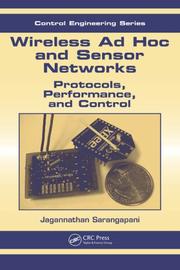 Wireless Ad hoc and Sensor NetworksJagannathan Sarangapani · 2007
 Transceiver and system design for digital communicationsScott R. Bullock · 1995
 Global RFIDEdmund W. Schuster · 2007
 RFID+Eva Zeisel, Robert Sabella · 2006
- 📕Sensors in the Age of the Internet of ThingsOctavian Adrian Postolache, Edward Sazonov · 2019
 Transparent user authenticationNathan Clarke · 2011
 Ultra-Wideband Radio Frequency Identification SystemsFaranak Nekoogar · 2011
 Radio Resource Management for Multimedia QoS Support in Wireless NetworksHuan Chen, Lei Huang · 2003
Ranked by number of editions on Open Library, a rough measure of how lasting a book is.
🔗 Related topics
- UMTS Terrestrial Radio Access Network UMTS Terrestrial Radio Access Network (UTRAN) is a collective term for a kind of network and equipment that connects mobile handsets to the public telephone…
- RANAP In telecommunications networks, RANAP (Radio Access Network Application Part) is a protocol specified by 3GPP in TS 25.413 and used in UMTS for signaling…
- RNSAP RNSAP (Radio Network Subsystem Application Part) is a 3GPP signalling protocol responsible for communications between RNCs Radio Network Controllers defined…
- Node B In the UMTS architecture, Node B is the base station that provides the radio interface between mobile devices and the UMTS Terrestrial Radio Access Network…
- HNBAP HNBAP is a control protocol found in Home Node B networks. It provides: Registration of HNB with the HNB-GW Identification of the HNB Registration of UE…
- System Architecture Evolution System Architecture Evolution (SAE) is the core network architecture of mobile communications protocol group 3GPP's LTE wireless communication standard…
- Mobile Application Part The Mobile Application Part (MAP) is an SS7 protocol that provides an application layer for the various nodes in GSM and UMTS mobile core networks and…
- Home NodeB A Home Node B, or HNB, is the 3GPP's term for a 3G femtocell or Small Cell. A Node B is an element of a 3G macro Radio Access Network, or RAN. A femtocell…