Live briefing
Everything about Quantum counting algorithm
Quantum algorithm for counting solutions to search problems
The Quantum counting algorithm is a quantum algorithm for efficiently counting the number of solutions for a given search problem. The algorithm is based on the quantum phase estimation algorithm and on Grover's search algorithm. Wikipedia →
🧭 Start here: a 6-step reading path
- Read the overview: Quantum counting algorithmA 5-minute orientation
- Skim a recent paper: Potential of employing a quantum iterative reconstruction algorithm for ultra-high-resolution photon-counting detector CT of the hipInfluential work since 2022
- Pick up a classic book: HackingThe most-reprinted book on the subject
- Read the landmark paper: Quantum Counting: Algorithm and Error DistributionCited 25 times
- Go sideways: Amplitude amplificationA closely related topic
- Go sideways: Quantum phase estimation algorithmA closely related topic
📖 Definitions
No dictionary entry for this exact phrase.
🗂️ The subject at a glance
🏆 Landmark papers (most cited)
Quantum Counting: Algorithm and Error Distribution
Influences of Gate Operation Errors in the Quantum Counting Algorithm
Quantum counting algorithm and its application in mesoscopic physics
Simulating the quantum Fourier transform, Grover's algorithm, and the quantum counting algorithm with limited entanglement using tensor networks
Entanglement in Phase Estimation Algorithm and Quantum Counting Algorithm
Generalized quantum counting algorithm for non-uniform amplitude distribution
Application of the Quantum Counting Algorithm to Estimate the Weights of Boolean Functions in Quipper
Distributed quantum approximate counting algorithm
🆕 Influential since 2022
📚 Books worth reading
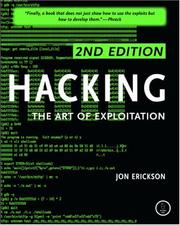 HackingJon Erickson, Jon Erickson · 2003
 An introduction to mathematical cryptographyJeffrey Hoffstein · 2008
- 📕ComputingYoshihide Igarashi · 2014
 Similarity-Based Pattern RecognitionEdwin Hancock · 2013
 Mathematics of quantum computationGoong Chen · 2002
 A shortcut through timeJohnson, George · 2003
 The P=NP question and Gödel's lost letterRichard J. Lipton · 2010
 The mathematics of encryptionMargaret B. Cozzens · 2013
Ranked by number of editions on Open Library, a rough measure of how lasting a book is.
🔗 Related topics
- Amplitude amplification Amplitude amplification is a technique in quantum computing that generalizes the idea behind Grover's search algorithm, and gives rise to a family of quantum…
- Quantum phase estimation algorithm In quantum computing, the quantum phase estimation algorithm is a quantum algorithm to estimate the phase corresponding to an eigenvalue of a given unitary…
- Quantum walk search In the context of quantum computing, the quantum walk search (sometimes regarded as QFS, similar to DFS and BFS) is a quantum algorithm for finding a marked…
- Projection filters Projection filters are a set of algorithms based on stochastic analysis and information geometry, or the differential geometric approach to statistics…
- Peierls substitution The Peierls substitution method, named after the original work by Rudolf Peierls is a widely employed approximation for describing tightly-bound electrons…
- Bernstein–Vazirani algorithm The Bernstein–Vazirani algorithm, which solves the Bernstein–Vazirani problem, is a quantum algorithm invented by Ethan Bernstein and Umesh Vazirani in…
- Kicked rotator The kicked rotator, also spelled as kicked rotor, is a paradigmatic model for both Hamiltonian chaos (the study of chaos in Hamiltonian systems) and quantum…
- KLM protocol The KLM scheme or KLM protocol is an implementation of linear optical quantum computing (LOQC) developed in 2000 by Emanuel Knill, Raymond Laflamme and…