Live briefing

Everything about QR code
Type of two-dimensional barcode
A QR code, short for quick-response code, is a type of two-dimensional matrix barcode invented in 1994 by Masahiro Hara of the Japanese company Denso Wave for labelling automobile parts. It features white ("0") and black ("1") squares within a square grid featuring fiducial markers on the corners, readable by imaging devices like cameras, and processed using Reed–Solomon error correction until the image can be appropriately interpreted. The required data is then extracted from patterns that are present in both the horizontal and the vertical components of the QR image. Wikipedia →
🧭 Start here: a 6-step reading path
- Read the overview: QR codeA 5-minute orientation
- Skim a recent paper: Suppressing quantum errors by scaling a surface code logical qubitInfluential work since 2022
- Pick up a classic book: Deeper Learning With QR Codes and Augmented RealityThe most-reprinted book on the subject
- Read the landmark paper: Backpropagation Applied to Handwritten Zip Code RecognitionCited 9,944 times
- Go sideways: Rectangular Micro QR CodeA closely related topic
- Go sideways: PDF417A closely related topic
📖 Definitions
No dictionary entry for this exact phrase.
🏆 Landmark papers (most cited)
Backpropagation Applied to Handwritten Zip Code Recognition
First-principles simulation: ideas, illustrations and the CASTEP code
A decimal code for the growth stages of cereals
VASPKIT: A user-friendly interface facilitating high-throughput computing and analysis using VASP code
Translating the Histone Code
BoltzTraP. A code for calculating band-structure dependent quantities
The cosmological simulation code gadget-2
Space-time codes for high data rate wireless communication: performance criterion and code construction
🆕 Influential since 2022
Suppressing quantum errors by scaling a surface code logical qubit
Competition-level code generation with AlphaCode
Quantum error correction below the surface code threshold
Realizing repeated quantum error correction in a distance-three surface code
Quantum logic with spin qubits crossing the surface code threshold
📚 Books worth reading
 Deeper Learning With QR Codes and Augmented RealityMonica Burns · 2016
 Location-aware services and QR codes for librariesJoe Murphy · 2012
 KnittingTessa Evelegh · 2015
 YouTutorial HairstylingCaroline Jones · 2015
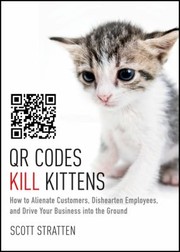 Qr Codes Kill Kittens How To Alienate Customers Dishearten Employees And Drive Your Business Into The GroundScott Stratten · 2013
- 📕QR kōdo no kisekiSusumu Ogawa · 2020
 The Unassuming CollectionChris Gibson · 2018
 Yoututorial - MakeupCaroline Jones · 2015
Ranked by number of editions on Open Library, a rough measure of how lasting a book is.
🔗 Related topics
- Rectangular Micro QR Code Rectangular Micro QR Code (also known as rMQR Code) is two-dimensional (2D) matrix barcode invented and standardized in 2022 by Denso Wave as ISO/IEC 23941…
- PDF417 PDF417 is a stacked linear barcode format used in a variety of applications such as transport, identification cards, and inventory management. "PDF" stands…
- Han Xin code Han Xin code (汉信码 in Chinese, Chinese-sensible code) is two-dimensional (2D) matrix barcode symbology invented in 2007 by Chinese company The Article Numbering…
- Data Matrix A Data Matrix is a two-dimensional code consisting of black and white "cells" or dots arranged in either a square or rectangular pattern, also known as…
- MicroPDF417 MicroPDF417 is two-dimensional (2D) stacked barcode symbology invented in 1996, by Frederick Schuessler, Kevin Hunter, Sundeep Kumar and Cary Chu from…
- DotCode DotCode is a two-dimensional (2D) matrix barcode invented in 2008 by Hand Held Products as a replacement for the outdated Code 128. At this time, it is…
- SPARQCode A SPARQCode is a matrix code (or two-dimensional bar code) encoding standard that is based on the physical QR Code definition created by Japanese corporation…
- Extended Channel Interpretation Extended Channel Interpretation (ECI) is an extension to the communication protocol that is used to transmit data from a bar code reader to a host when…