Live briefing
Everything about Q code
Type of Morse code operating signal
The Q-code is a standardised collection of three-letter codes that each start with the letter "Q". It is an operating signal initially developed for commercial radiotelegraph communication, later also for TeleTYpe and RadioTeleTYpe and in voice communications. Most Q-codes defined in 1947 are still in use today, date back to the International Telecommunication Convention in Atlantic City, 1947 and are standardized in the ITU International Radio Regulations from 1947 (ITU-RR). Wikipedia →
🧭 Start here: a 6-step reading path
- Read the overview: Q codeA 5-minute orientation
- Skim a recent paper: Suppressing quantum errors by scaling a surface code logical qubitInfluential work since 2022
- Pick up a classic book: The theory of information and codingThe most-reprinted book on the subject
- Read the landmark paper: Backpropagation Applied to Handwritten Zip Code RecognitionCited 9,944 times
- Go sideways: Prosigns for Morse codeA closely related topic
- Go sideways: Maritime Mobile Service Q CodesA closely related topic
📖 Definitions
No dictionary entry for this exact phrase.
🏆 Landmark papers (most cited)
Backpropagation Applied to Handwritten Zip Code Recognition
First-principles simulation: ideas, illustrations and the CASTEP code
A decimal code for the growth stages of cereals
VASPKIT: A user-friendly interface facilitating high-throughput computing and analysis using VASP code
Translating the Histone Code
BoltzTraP. A code for calculating band-structure dependent quantities
The cosmological simulation code gadget-2
Space-time codes for high data rate wireless communication: performance criterion and code construction
🆕 Influential since 2022
Suppressing quantum errors by scaling a surface code logical qubit
Competition-level code generation with AlphaCode
Quantum error correction below the surface code threshold
Realizing repeated quantum error correction in a distance-three surface code
Quantum logic with spin qubits crossing the surface code threshold
📚 Books worth reading
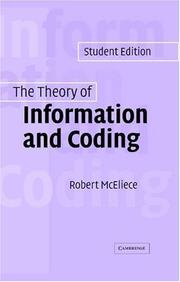 The theory of information and codingRobert J. McEliece · 1977
 Game Counselor's Answer Book for Nintendo PlayersThe Game Counselor, Inc. · 1991
Ranked by number of editions on Open Library, a rough measure of how lasting a book is.
🔗 Related topics
- Prosigns for Morse code Procedural signs or prosigns are shorthand signals used in Morse code telegraphy, for the purpose of simplifying and standardizing procedural protocols…
- Maritime Mobile Service Q Codes The Maritime Mobile Service Q Codes are part of a larger set of Q Codes designated by the ITU-R. The QOA–QQZ code range is reserved for the Maritime Mobile…
- Signal strength and readability report A signal strength and readability report is a standardized format for reporting the strength of the radio signal and the readability (quality) of the radiotelep…
- Morse code Morse code is a telecommunications method which encodes text characters as standardized sequences of two different signal durations, called dots and dashes…
- Amateur radio Amateur radio, also known as ham radio, is the use of specific bands and frequencies within the radio spectrum for non-commercial communication, technical…
- NATO phonetic alphabet The NATO phonetic alphabet, officially the International Radiotelephony Spelling Alphabet, is an internationally recognized set of names for the letters…
- QSA and QRK radio signal reports The QSA code and QRK code are interrelated and complementary signal reporting codes for use in wireless telegraphy (Morse code). An enhanced format, SINPO…
- 500 kHz From early in the 20th century, the radio frequency of 500 kilohertz (500 kHz) was an international calling and distress frequency for Morse code maritime…