Everything about Pulse
Tactile arterial palpation of the heartbeat by fingertips
In medicine, pulse is the rhythmic expansion and contraction of an artery in response to the cardiac cycle (heartbeat). The pulse may be felt (palpated) in any place that allows an artery to be compressed near the surface of the body, such as at the neck, wrist, at the groin, behind the knee, near the ankle joint, and on foot. The pulse is most commonly measured at the wrist or neck for adults and at the brachial artery for infants and very young children. A sphygmograph is an instrument for measuring the pulse. Wikipedia →
🧭 Start here: a 6-step reading path
- Read the overview: PulseA 5-minute orientation
- Skim a recent paper: Wearable Pressure Sensors for Pulse Wave MonitoringInfluential work since 2022
- Pick up a classic book: Ultrashort laser pulse phenomenaThe most-reprinted book on the subject
- Read the landmark paper: An Active Pulse Transmission Line Simulating Nerve AxonCited 3,372 times
- Go sideways: Outline of cardiologyA closely related topic
- Go sideways: Cardiovascular examinationA closely related topic
📖 Definitions
Noun A normally regular beat felt when arteries near the skin (for example, at the neck or wrist) are depressed, caused by the heart pumping blood through them; the qualitative nature of this beat.
Noun A normally regular beat felt when arteries near the skin (for example, at the neck or wrist) are depressed, caused by the heart pumping blood through them; the qualitative nature of this beat.
Noun The rate of this beat as an indication of a person's health.
Noun A beat or throb; also, a repeated sequence of such beats or throbs.
🗂️ The subject at a glance
🏆 Landmark papers (most cited)
An Active Pulse Transmission Line Simulating Nerve Axon
Experimental Observation of Picosecond Pulse Narrowing and Solitons in Optical Fibers
Femtosecond pulse shaping using spatial light modulators
Determinants of pulse wave velocity in healthy people and in the presence of cardiovascular risk factors: ‘establishing normal and reference values’
Expert consensus document on the measurement of aortic stiffness in daily practice using carotid-femoral pulse wave velocity
Semiconductor saturable absorber mirrors (SESAM's) for femtosecond to nanosecond pulse generation in solid-state lasers
Optimal control of coupled spin dynamics: design of NMR pulse sequences by gradient ascent algorithms
Aortic Pulse Wave Velocity Improves Cardiovascular Event Prediction
🆕 Influential since 2022
Wearable Pressure Sensors for Pulse Wave Monitoring
Racial and Ethnic Discrepancy in Pulse Oximetry and Delayed Identification of Treatment Eligibility Among Patients With COVID-19
Integrated femtosecond pulse generator on thin-film lithium niobate
Piezoelectric Dynamics of Arterial Pulse for Wearable Continuous Blood Pressure Monitoring
Integrated natural deep eutectic solvent and pulse-ultrasonication for efficient extraction of crocins from gardenia fruits (Gardenia jasminoides Ellis) and its bioactivities
📚 Books worth reading
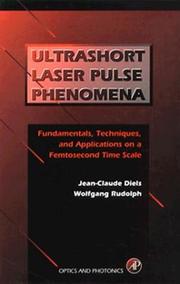 Ultrashort laser pulse phenomenaJean-Claude Diels, Wolfgang Rudolph · 1995
 Pulse-Width Modulated DC-DC Power ConvertersMarian K. Kazimierczuk · 2008
 Experimental pulse NMREiichi Fukushima, Fukushima · 1981
 Total fitness in 30 minutes a weekLaurence Englemohr Morehouse · 1975
 The Supercontinuum Laser SourceRobert R. Alfano · 1989
 Supercontinuum generation in optical fibersJ. M. Dudley · 2010
- 📕脈經Shuhe Wang · 1626
- 📕Introduction to Ultrafast PhenomenaGuo-ping Zhang, Georgios Lefkidis · 2020
Ranked by number of editions on Open Library, a rough measure of how lasting a book is.
🔗 Related topics
- Outline of cardiology The following outline is provided as an overview of and topical guide to cardiology, the branch of medicine dealing with disorders of the human heart.…
- Cardiovascular examination The cardiovascular examination is a portion of the physical examination that involves evaluation of the cardiovascular system. The exact contents of the…
- Cardiac examination In medicine, the cardiac examination, also precordial exam, is performed as part of a physical examination, or when a patient presents with chest pain…
- Heart murmur Heart murmurs are unique heart sounds produced when blood flows across a heart valve or blood vessel. This occurs when turbulent blood flow creates a sound…
- Coarctation of the aorta Coarctation of the aorta (CoA) is a congenital condition whereby the aorta is narrow, usually in the area where the ductus arteriosus (ligamentum arteriosum…
- Pulsus alternans Pulsus alternans is a physical finding with arterial pulse waveform showing alternating strong and weak beats. It is almost always indicative of left ventricula…
- Systole Systole (/ˈsɪstəli/ SIST-ə-lee) is the part of the cardiac cycle during which some chambers of the heart contract after refilling with blood. Its contrasting…
- List of circulatory system conditions This is an incomplete list, which may never be able to satisfy certain standards for completion. There are many conditions of or affecting the human circulatory…