Everything about Pseudorandom binary sequence
Seemingly random, difficult to predict bit stream created by a deterministic algorithm
A pseudorandom binary sequence (PRBS), pseudorandom binary code or pseudorandom bitstream is a binary sequence that, while generated with a deterministic algorithm, is difficult to predict and exhibits statistical behavior similar to a truly random sequence. PRBS generators are used in telecommunication, such as in analog-to-information conversion, but also in encryption, simulation, correlation technique and time-of-flight spectroscopy. The most common example is the maximum length sequence generated by a (maximal) linear feedback shift register (LFSR). Other examples are Gold sequences, Kasami sequences and JPL sequences, all based on LFSRs. Wikipedia →
🧭 Start here: a 6-step reading path
- Read the overview: Pseudorandom binary sequenceA 5-minute orientation
- Skim a recent paper: Doppler Shift Tolerance of Typical Pseudorandom Binary Sequences in PMCW RadarInfluential work since 2022
- Pick up a classic book: Digital systems testing and testable designThe most-reprinted book on the subject
- Read the landmark paper: On Finite Pseudorandom Binary SequencesCited 45 times
- Go sideways: Linear-feedback shift registerA closely related topic
- Go sideways: Lagged Fibonacci generatorA closely related topic
📖 Definitions
No dictionary entry for this exact phrase.
🗂️ The subject at a glance
🏆 Landmark papers (most cited)
On Finite Pseudorandom Binary Sequences
All-optical pseudorandom binary sequence generator with TOAD-based D flip-flops
On a family of pseudorandom binary sequences
An 80-Gb/s 2/sup 31/-1 pseudorandom binary sequence generator in SiGe BiCMOS technology
Investigation of VO2 kinetics in humans with pseudorandom binary sequence work rate change
Clincal Use of Pseudorandom Binary Sequence White Noise in Assessment of the Human Vestibulo-Ocular System
Analysis on Stability of Binary Chaotic Pseudorandom Sequence
Z8-Kerdock codes and pseudorandom binary sequences
🆕 Influential since 2022
Doppler Shift Tolerance of Typical Pseudorandom Binary Sequences in PMCW Radar
Arithmetic Crosscorrelation of Pseudorandom Binary Sequences of Coprime Periods
Pseudorandom Binary Sequences: Quality Measures and Number-Theoretic Constructions
64-GHz Operation of the Pseudorandom Binary Sequence Generator Using the Dual RSFQ/ERSFQ Standard Cell Library
Identifying Elementary Reaction Kinetics of Heterogeneous Catalytic Mechanisms Using Pseudorandom Binary Sequence-Induced Transients
📚 Books worth reading
 Digital systems testing and testable designMiron Abramovici · 1990
 TCP/IP IllustratedW. Richard Stevens, Kevin R. Fall · 1993
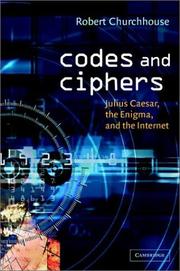 Codes and CiphersR. F. Churchhouse · 2001
 Sequences and their ApplicationsT. Helleseth · 2001
- 📕The simultaneous use of several pseudo-random binary sequences in the identification of linear multivariable dynamic systemsJ D. Cummins · 1965
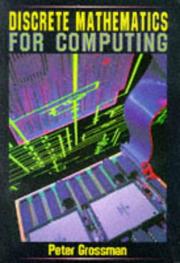 Discrete Mathematics for ComputingPeter Grossman · 1995
Ranked by number of editions on Open Library, a rough measure of how lasting a book is.
🔗 Related topics
- Linear-feedback shift register In computing, a linear-feedback shift register (LFSR) is a shift register whose input bit is a linear function of its previous state. The most commonly…
- Lagged Fibonacci generator A Lagged Fibonacci generator (LFG or sometimes LFib) is an example of a pseudorandom number generator. This class of random number generator is aimed at…
- Maximum-length sequence A maximum-length sequence (MLS) is a type of pseudorandom binary sequence. They are bit sequences generated using maximal linear-feedback shift registers…
- Alternating step generator In cryptography, an alternating step generator (ASG) is a cryptographic pseudorandom number generator used in stream ciphers, based on three linear-feedback…
- Shrinking generator In cryptography, the shrinking generator is a form of pseudorandom number generator intended to be used in a stream cipher. It was published in Crypto…
- Berlekamp–Massey algorithm The Berlekamp–Massey algorithm is an algorithm that will find the shortest linear-feedback shift register (LFSR) for a given binary output sequence. The…
- Linear congruential generator A linear congruential generator (LCG) is an algorithm that yields a sequence of pseudo-randomized numbers calculated with a discontinuous piecewise linear…
- Nonlinear-feedback shift register A nonlinear-feedback shift register (NLFSR) is a shift register whose input bit is a non-linear function of its previous state. For an n-bit shift register…