Live briefing

Everything about Programming language theory
Branch of computer science
Programming language theory (PLT) is a branch of computer science that deals with the design, implementation, analysis, characterization, and classification of formal languages known as programming languages. Programming language theory is closely related to other fields including linguistics, mathematics, and software engineering. Wikipedia →
🧭 Start here: a 6-step reading path
- Read the overview: Programming language theoryA 5-minute orientation
- Skim a recent paper: Evaluating Kindergarten Parents’ Acceptance of Unplugged Programming Language Courses: An Extension of Theory of Planned BehaviorInfluential work since 2022
- Pick up a classic book: Invitation to Computer ScienceThe most-reprinted book on the subject
- Read the landmark paper: REST: Embracing the rust programming language for modern electronic structure theoryCited 10 times
- Go sideways: Carl HewittA closely related topic
- Go sideways: Lambda calculusA closely related topic
📖 Definitions
No dictionary entry for this exact phrase.
🗂️ The subject at a glance
🏆 Landmark papers (most cited)
REST: Embracing the rust programming language for modern electronic structure theory
DORF2R.BAS: Analyzing signal-detection theory rating data in the BASIC programming language
The place of own variables in programming language theory
Denotational semantics: The scott-strachey approach to programming language theory
Programming Language Theory and Its Implementation
Programming language foundations of computation theory
Programming language theory and its implementation
Array theory and the nial programming language
🆕 Influential since 2022
📚 Books worth reading
 Invitation to Computer ScienceG. Michael Schneider, Judith L. Gersting · 1995
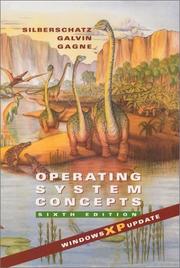 Operating System ConceptsAbraham Silberschatz · 1988
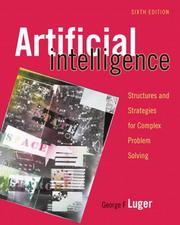 Artificial intelligenceGeorge F. Luger, LUGER · 1992
 Statistical RethinkingRichard McElreath · 2015
 Computer science illuminatedNell B. Dale, Nell Dale · 2002
 An introduction to formal languages and automataPeter Linz · 1990
 Introduction to automata theory, languages, and computationJohn E. Hopcroft, Jeffrey D. Ullman · 1979
 Languages and machinesThomas A. Sudkamp · 1988
Ranked by number of editions on Open Library, a rough measure of how lasting a book is.
🔗 Related topics
- Carl Hewitt Carl Eddie Hewitt (/ˈhjuːɪt/; December 12, 1944 – December 7, 2022) was an American computer scientist who designed the Planner programming language for…
- Lambda calculus In mathematical logic, the lambda calculus (also written as λ-calculus) is a formal system for expressing computation based on function abstraction and…
- Categorical abstract machine The categorical abstract machine (CAM) is a model of computation for programs that preserves the abilities of applicative, functional, or compositional…
- Functional programming In computer science, functional programming is a programming paradigm where programs are constructed by applying and composing functions. It is a declarative…
- List of programming language researchers The following is list of researchers of programming language theory, design, implementation, and related areas. Martín Abadi, for the programming language…
- List of formal systems This is a list of formal systems, also known as logical calculi. Functional calculus, a way to apply various types of functions to operators Matrix calculus…
- Gordon Plotkin Gordon David Plotkin (born 9 September 1946) is a theoretical computer scientist in the School of Informatics at the University of Edinburgh. Plotkin is…
- Simply typed lambda calculus The simply typed lambda calculus ( λ → {\displaystyle \lambda ^{\to }} ), a form of type theory, is a typed interpretation of the lambda calculus with…