Live briefing
Everything about Program structure tree
A program structure tree (PST) is a hierarchical diagram that displays the nesting relationship of single-entry single-exit (SESE) fragments/regions, showing the organization of a computer program. Nodes in this tree represent SESE regions of the program, while edges represent nesting regions. The PST is defined for all control flow graphs. Wikipedia →
🧭 Start here: a 6-step reading path
- Read the overview: Program structure treeA 5-minute orientation
- Skim a recent paper: When Every Total Program Is a Finite Tree-Program: A Study of Program-Saturated Classes of StructuresInfluential work since 2022
- Pick up a classic book: Fundamentals of Computer Programming with CSharp Free Book (by Nakov & Co.)The most-reprinted book on the subject
- Read the landmark paper: The program structure treeCited 53 times
- Go sideways: SPQR treeA closely related topic
- Go sideways: Planarity testingA closely related topic
📖 Definitions
No dictionary entry for this exact phrase.
🗂️ The subject at a glance
🏆 Landmark papers (most cited)
The program structure tree
Evaluation of parallel execution of program tree structures
The Development and Application Effects of STEAM Program for Tree Model Fractal Structure using 3D Printer
A PROPOSAL FOR A FRACTAL -BASED ‘DYNAMIC’ PROGRAM: THE PYTHAGOREAN TREE STRUCTURE GENERATED THROUGH ‘INSTRUMENTAL’ SCHEMATA
Chapter 22: Apple Tree: Branches Instructional Materials Used in the Apple Tree Program
🆕 Influential since 2022
📚 Books worth reading
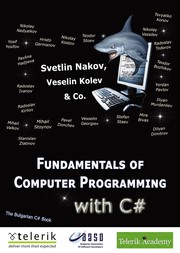 Fundamentals of Computer Programming with CSharp Free Book (by Nakov & Co.)Svetlin Nakov · 2013
 Notes on AVL treesEdward M. Reingold · 1971
Ranked by number of editions on Open Library, a rough measure of how lasting a book is.
🔗 Related topics
- SPQR tree In graph theory, a branch of mathematics, the triconnected components of a biconnected graph are a system of smaller graphs that describe all of the 2-vertex…
- Planarity testing In graph theory, the planarity testing problem is the algorithmic problem of testing whether a given graph is a planar graph (that is, whether it can be…
- Bipolar orientation In graph theory, a bipolar orientation or st-orientation of an undirected graph is an assignment of a direction to each edge (an orientation) that causes…
- Biconnected component In graph theory, a biconnected component or block (sometimes known as a 2-connected component) is a maximal biconnected subgraph. Any connected graph decomposes…
- Vertex connectivity In graph theory, a connected graph G is said to be k-vertex-connected (or k-connected) if it has more than k vertices and remains connected whenever fewer…
- Partial k-tree In graph theory, a partial k-tree is a type of graph, defined either as a subgraph of a k-tree or as a graph with treewidth at most k. Many NP-hard combinatoria…
- Strongly connected component In the mathematical theory of directed graphs, a graph is said to be strongly connected if every vertex is reachable from every other vertex. The strongly…
- Upward planar drawing In graph drawing, an upward planar drawing of a directed acyclic graph is an embedding of the graph into the Euclidean plane, in which the edges are represented…