Everything about Process capability index
Statistical measure of process capability
The process capability index, or process capability ratio, is a statistical measure of process capability: the ability of an engineering process to produce an output within specification limits. The concept of process capability only holds meaning for processes that are in a state of statistical control. This means it cannot account for deviations which are not expected, such as misaligned, damaged, or worn equipment. Process capability indices measure how much "natural variation" a process experiences relative to its specification limits, and allows different processes to be compared to how well an organization controls them. Somewhat counterintuitively, higher index values indicate better performance, with zero indicating high deviation. Wikipedia →
🧭 Start here: a 6-step reading path
- Read the overview: Process capability indexA 5-minute orientation
- Skim a recent paper: Maintaining viability by rapid supply chain adaptation using a process capability indexInfluential work since 2022
- Pick up a classic book: Modern Operating SystemsThe most-reprinted book on the subject
- Read the landmark paper: A new process capability index for non‐normal distributionsCited 59 times
- Go sideways: Process performance indexA closely related topic
- Go sideways: Z-factorA closely related topic
📖 Definitions
No dictionary entry for this exact phrase.
🏆 Landmark papers (most cited)
A new process capability index for non‐normal distributions
A process capability index sensitive to skewness
New generalization of process capability index Cpk
A process capability index for simple linear profile
A robust process capability index
A process capability index with reliable confidence intervals
A CAPABILITY INDEX FOR MULTIPLE PROCESS STREAMS
Incorporating process capability index and quality loss function into analyzing the process capability for qualitative data
🆕 Influential since 2022
Maintaining viability by rapid supply chain adaptation using a process capability index
Development of an adaptive sampling system based on a process capability index with flexible switching mechanism
A general novel process capability index for normal and non-normal measurements
Dynamic failure mode analysis approach based on an improved Taguchi process capability index
Bayesian and classical inference of the process capability index under progressive type-II censoring scheme
📚 Books worth reading
 Modern Operating SystemsAndrew S. Tanenbaum, Herbert Bos · 1992
 Precision measurement and calibrationUnited States. National Bureau of Standards. · 1961
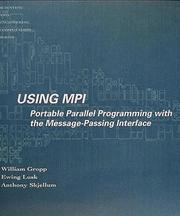 Using MPIWilliam Gropp, Ewing Lusk · 1994
 The health care data guideLloyd P. Provost · 2011
 Transforming HRMark Withers · 2009
 Connecting knowledge and performance in public servicesKieran Walshe · 2010
 Business TransformationAiman Zeid, Jim Davis · 2014
 System softwareLeland L. Beck · 1985
Ranked by number of editions on Open Library, a rough measure of how lasting a book is.
🔗 Related topics
- Process performance index In process improvement efforts, the process performance index is an estimate of the process capability of a process during its initial set-up, before it…
- Z-factor The Z-factor is a measure of statistical effect size. It has been proposed for use in high-throughput screening (HTS), where it is also known as Z-prime…
- Process capability The process capability is a measurable property of a process to the specification, expressed as a process capability index (e.g., Cpk or Cpm) or as a process…
- Coefficient of variation In probability theory and statistics, the coefficient of variation (CV), also known as normalized root-mean-square deviation (NRMSD), and relative standard…
- Six Sigma Six Sigma (6σ) is a set of techniques and tools for process improvement. It was introduced by American engineer Bill Smith while working at Motorola in…
- Index of dispersion In probability theory and statistics, the index of dispersion, dispersion index, coefficient of dispersion, relative variance, or variance-to-mean ratio…
- Z-test A Z-test is any statistical test for which the distribution of the test statistic under the null hypothesis can be approximated by a normal distribution…
- Experimental uncertainty analysis Experimental uncertainty analysis is a technique that analyses a derived quantity, based on the uncertainties in the experimentally measured quantities…