Everything about Problem solving
Process of achieving a goal by overcoming obstacles

Problem solving is the use of logical reasoning, cognition, and past experiences to find a solution. The process of problem solving can be split into three parts: identifying a problem, developing a strategy, and following through with a strategy to achieve a solution. Problems in need of solutions range from simple personal tasks to complex issues in business and technical fields. The former is an example of simple problem solving (SPS) addressing one issue, whereas the latter is complex problem solving (CPS) with multiple interrelated obstacles. Another classification of problem-solving tasks is into well-defined problems with specific obstacles and goals, and ill-defined problems in which the current situation is troublesome but it is not clear what kind of resolution to aim for. Similarly, one may distinguish formal or fact-based problems requiring psychometric intelligence, versus socio-emotional problems which depend on the changeable emotions of individuals or groups, such as tactful behavior, fashion, or gift choices. Wikipedia →
🧭 Start here: a 6-step reading path
- Read the overview: Problem solvingA 5-minute orientation
- Skim a recent paper: Honey Badger Algorithm: New metaheuristic algorithm for solving optimization problemsInfluential work since 2022
- Pick up a classic book: Artificial intelligenceThe most-reprinted book on the subject
- Read the landmark paper: Physics-informed neural networks: A deep learning framework for solving forward and inverse problems involving nonlinear partial differential equationsCited 20,983 times
- Go sideways: Alan LesgoldA closely related topic
- Go sideways: John Robert Anderson (psychologist)A closely related topic
📖 Definitions
Verb present participle of problem solve
Noun Alternative form of problem-solving.
🏆 Landmark papers (most cited)
Physics-informed neural networks: A deep learning framework for solving forward and inverse problems involving nonlinear partial differential equations
Cognitive Load During Problem Solving: Effects on Learning
An Evolutionary Many-Objective Optimization Algorithm Using Reference-Point-Based Nondominated Sorting Approach, Part I: Solving Problems With Box Constraints
THE ROLE OF TUTORING IN PROBLEM SOLVING *
SCA: A Sine Cosine Algorithm for solving optimization problems
Partitioning procedures for solving mixed-variables programming problems
LII. An essay towards solving a problem in the doctrine of chances. By the late Rev. Mr. Bayes, F. R. S. communicated by Mr. Price, in a letter to John Canton, A. M. F. R. S
🆕 Influential since 2022
Honey Badger Algorithm: New metaheuristic algorithm for solving optimization problems
Coati Optimization Algorithm: A new bio-inspired metaheuristic algorithm for solving optimization problems
Artificial rabbits optimization: A new bio-inspired meta-heuristic algorithm for solving engineering optimization problems
Black-winged kite algorithm: a nature-inspired meta-heuristic for solving benchmark functions and engineering problems
Osprey optimization algorithm: A new bio-inspired metaheuristic algorithm for solving engineering optimization problems
📚 Books worth reading
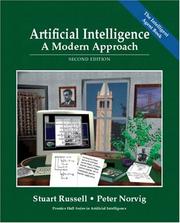 Artificial intelligenceStuart J. Russell, Peter Norvig · 1994
 How to solve itGeorge Pólya · 1945
 Mathematical discoveryGeorge Pólya · 1962
 Contemporary Strategy AnalysisRobert M. Grant · 2010
 Applied ImaginationAlex Faickney Osborn · 1953
 Lateral thinking: creativity step by stepEdward de Bono, Alexandre Gombau Armau · 1970
 The Power of Focused ThinkingEdward de Bono, Feng yang · 1981
 There's a Spiritual Solution to Every ProblemWayne W. Dyer · 1975
Ranked by number of editions on Open Library, a rough measure of how lasting a book is.
🔗 Related topics
- Alan Lesgold Alan M. Lesgold, an educational psychologist, is professor of psychology and Dean of the University of Pittsburgh School of Education. He received a PhD…
- John Robert Anderson (psychologist) John Robert Anderson (born August 27, 1947) is a Canadian-born American psychologist. As of 2024, he is professor of psychology and computer science at…
- Conceptual change Conceptual change is the process whereby concepts and relationships between them change over the course of an individual person's lifetime or over the…
- Eleanor Rosch Eleanor Rosch (once known as Eleanor Rosch Heider; born 9 July 1938) is an American psychologist. She is a professor of psychology at the University of…
- Polytely Polytely (from Greek roots poly- and -tel- meaning "many goals") comprises complex problem-solving situations characterized by the presence of multiple…
- Rudolf Groner Rudolf Groner (born July 26, 1942, Glarus, Switzerland) is a Swiss psychologist, specialized in cognitive psychology and media psychology. Groner received…
- Situated cognition Situated cognition is a theory that posits that knowing is inseparable from doing by arguing that all knowledge is situated in activity bound to social…
- Mental model A mental model is an internal representation of external reality: that is, a way of representing reality within the mind. Such models are hypothesized…