Live briefing
Everything about Probabilistic programming
Software system for statistical models
Probabilistic programming (PP) is a programming paradigm based on the declarative specification of probabilistic models, for which inference is performed automatically. Probabilistic programming attempts to unify probabilistic modeling and traditional general purpose programming in order to make the former easier and more widely applicable. It can be used to create systems that help make decisions in the face of uncertainty. Programming languages following the probabilistic programming paradigm are referred to as "probabilistic programming languages" (PPLs). Wikipedia →
🧭 Start here: a 6-step reading path
- Read the overview: Probabilistic programmingA 5-minute orientation
- Skim a recent paper: Abduction with probabilistic logic programming under the distribution semanticsInfluential work since 2022
- Pick up a classic book: Artificial intelligenceThe most-reprinted book on the subject
- Read the landmark paper: Probabilistic logic programmingCited 197 times
- Go sideways: List of Julia software and toolsA closely related topic
- Go sideways: Stan (software)A closely related topic
📖 Definitions
No dictionary entry for this exact phrase.
🗂️ The subject at a glance
🏆 Landmark papers (most cited)
Probabilistic logic programming
Probabilistic (logic) programming concepts
Neural probabilistic logic programming in DeepProbLog
On the implementation of the probabilistic logic programming language ProbLog
CP-logic: A language of causal probabilistic events and its relation to logic programming
Probabilistic logic programming with conditional constraints
Combining probabilistic logic programming with the power of maximum entropy
A probabilistic logic programming event calculus
🆕 Influential since 2022
Abduction with probabilistic logic programming under the distribution semantics
Semirings for probabilistic and neuro-symbolic logic programming
“What if?” in Probabilistic Logic Programming
Probabilistic Logic Programming Semantics For Procedural Content Generation
Probabilistic robotic logic programming with hybrid Boolean and Bayesian inference
📚 Books worth reading
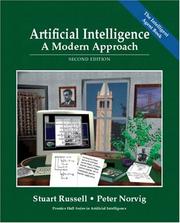 Artificial intelligenceStuart J. Russell, Peter Norvig · 1994
 Foundations of Probabilistic Logic ProgrammingFabrizio Riguzzi · 2018
 Language and Automata Theory and ApplicationsAdrian-Horia Dediu · 2012
 Treaty Occupationay ToxicologySuelen Queiroz · 2010
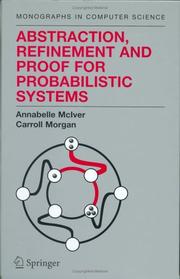 Abstraction, refinement and proof for probabilistic systemsAnnabelle McIver, Charles C. Morgan · 2004
 Logic, Language, and ComputationGuram Bezhanishvili · 2013
 Logic and Its ApplicationsKamal Lodaya · 2013
 Recent Trends in Algebraic Development TechniquesNarciso Martí-Oliet · 2013
Ranked by number of editions on Open Library, a rough measure of how lasting a book is.
🔗 Related topics
- List of Julia software and tools This is a list of Julia software and tools, including IDEs, notebook environments, package management tools, scientific and machine-learning libraries…
- Stan (software) Stan is a probabilistic programming language for statistical inference written in C++. The Stan language is used to specify a (Bayesian) statistical model…
- ArviZ ArviZ (/ˈɑːrvɪz/ AR-vees) is a Python package for exploratory analysis of Bayesian models. It is specifically designed to work with the output of probabilistic…
- ProbLog ProbLog is a probabilistic logic programming language that extends Prolog with probabilities. It minimally extends Prolog by adding the notion of a probabilisti…
- Statistical relational learning Statistical relational learning (SRL) is a subdiscipline of artificial intelligence and machine learning that is concerned with domain models that exhibit…
- PyMC PyMC (formerly known as PyMC3) is a probabilistic programming library for Python. It can be used for Bayesian statistical modeling and probabilistic machine…
- List of things named after Thomas Bayes Thomas Bayes (/beɪz/ BAYZ; c. 1701 – 1761) was an English statistician, philosopher, and Presbyterian minister. Bayesian (/ˈbeɪziən/ BAY-zee-ən or /ˈbeɪʒən/…
- Probabilistic soft logic Probabilistic Soft Logic (PSL) is a statistical relational learning (SRL) framework for modeling probabilistic and relational domains. It is applicable…