Live briefing
Everything about Printf
C function to format and output text
printf is a C standard library function and is also a Linux terminal (shell) command that formats text and writes it to standard output. The function accepts a format C-string argument and a variable number of value arguments that the function serializes per the format string. Mismatch between the format specifiers and count and type of values results in undefined behavior, and the program might crash or vulnerabilities may arise. Wikipedia →
🧭 Start here: a 6-step reading path
- Read the overview: PrintfA 5-minute orientation
- Pick up a classic book: The Linux CookbookThe most-reprinted book on the subject
- Read the landmark paper: On typing delimited continuations: three new solutions to the printf problemCited 20 times
- Go sideways: Printf (Unix)A closely related topic
- Go sideways: ScanfA closely related topic
📖 Definitions
No dictionary entry for this exact phrase.
🗂️ The subject at a glance
🏆 Landmark papers (most cited)
📚 Books worth reading
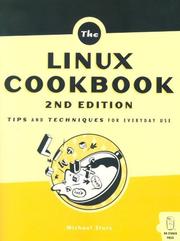 The Linux CookbookMichael Stutz · 2001
 Amiga C for beginnersDirk Schaun · 1987
Ranked by number of editions on Open Library, a rough measure of how lasting a book is.
🔗 Related topics
- Printf (Unix) printf is a shell command that formats and outputs text like the same-named C function. It is available in a variety of Unix and Unix-like systems. Some…
- Scanf scanf, short for scan formatted, is a C standard library function that reads and parses text from standard input. The function accepts a format string…
- Getopt getopt() is a POSIX C function used to parse command-line options of the Unix/POSIX style on C. It is a part of the POSIX specification, and is universal…
- C syntax C syntax is the form that text must have in order to be C programming language code. The language syntax rules are designed to allow for code that is terse…
- Stdarg.h <stdarg.h> is a header in the C standard library of the C programming language that allows functions to accept an indefinite number of arguments. It provides…
- C++ input/output library In the C++ programming language, input/output library refers to a family of class templates and supporting functions in the C++ Standard Library that implement…
- String interpolation In computer programming, string interpolation (or variable interpolation, variable substitution, or variable expansion) is the process of evaluating a…
- Ellipsis (computer programming) In computer programming, ellipsis notation (.. or ...) is used to denote ranges, an unspecified number of arguments, or a parent directory. Most programming…