Live briefing

Everything about Practical number
Number whose sums of distinct divisors represent all smaller numbers
In number theory, a practical number or panarithmic number is a positive integer such that all smaller positive integers can be represented as sums of distinct divisors of. For example, 12 is a practical number because all the numbers from 1 to 11 can be expressed as sums of its divisors 1, 2, 3, 4, and 6: as well as these divisors themselves, we have 5 = 3 + 2, 7 = 6 + 1, 8 = 6 + 2, 9 = 6 + 3, 10 = 6 + 3 + 1, and 11 = 6 + 3 + 2. Wikipedia →
🧭 Start here: a 6-step reading path
- Read the overview: Practical numberA 5-minute orientation
- Skim a recent paper: A high-performance hybrid random number generator based on a nondegenerate coupled chaos and its practical implementationInfluential work since 2022
- Pick up a classic book: Step-By-Step Medical CodingThe most-reprinted book on the subject
- Read the landmark paper: Beating the Photon-Number-Splitting Attack in Practical Quantum CryptographyCited 1,376 times
- Go sideways: Giuseppe MelfiA closely related topic
- Go sideways: List of number theory topicsA closely related topic
📖 Definitions
Noun Any positive integer having the property that all smaller integers can be represented as sums of distinct divisors of it
🏆 Landmark papers (most cited)
Beating the Photon-Number-Splitting Attack in Practical Quantum Cryptography
Practical considerations for measuring the effective reproductive number, Rt
Chaos-based random number generators. Part II: practical realization
“Just give me a number!” Practical values for the social discount rate
Practical considerations for the use of the optical disector in estimating neuronal number
Practical quantum random‐number generation based on sampling vacuum fluctuations
Practical quantum metrology with large precision gains in the low-photon-number regime
Practical photon number detection with electric field-modulated silicon avalanche photodiodes
🆕 Influential since 2022
A high-performance hybrid random number generator based on a nondegenerate coupled chaos and its practical implementation
A new chaotic system and its practical applications in substitution box and random number generator
Practical security analysis of a continuous-variable source-independent quantum random number generator based on heterodyne detection
Practical attack on a quantum random-number generator via injection of source-signal fluctuations
Prediction with expert advice for a finite number of experts: A practical introduction
📚 Books worth reading
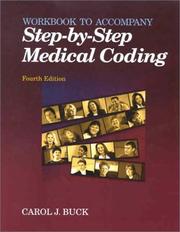 Step-By-Step Medical CodingCarol J. Buck · 1996
 Coding for PediatricsCommittee on Coding and Nomenclature · 1999
 Medical Billing 101Michelle M. Rimmer · 2007
 The complete diagnosis coding bookShelley C. Safian, Shelley Safian · 2008
- 📕Getting Paid for What You DoGary M. Knaus · 1987
 The extra stepCarol J. Buck · 2003
 CPT & HCPCS coding made easy!James B. Davis · 1992
 Mastering CodingMarsha S. Diamond · 2001
Ranked by number of editions on Open Library, a rough measure of how lasting a book is.
🔗 Related topics
- Giuseppe Melfi Giuseppe Melfi (June 11, 1967) is an Italo-Swiss mathematician who works on practical numbers and modular forms. He gained his PhD in mathematics in 1997…
- List of number theory topics This is a list of topics in number theory. See also: List of recreational number theory topics Topics in cryptography Composite number Highly composite…
- Highly composite number A highly composite number is a positive integer that has more divisors than all smaller positive integers. If d(n) denotes the number of divisors of a…
- Primorial In mathematics, and more particularly in number theory, primorial, denoted by "pn#", is a function from natural numbers to natural numbers similar to the…
- Prime number A prime number (or a prime) is a natural number greater than 1 that is not a product of two smaller natural numbers. A natural number greater than 1 that…
- Sylvester's sequence In number theory, Sylvester's sequence is an integer sequence in which each term is the product of the previous terms, plus one. Its first few terms are…
- Abundant number In number theory, an abundant number or excessive number is a positive integer for which the sum of its proper divisors is greater than the number. The…
- Divisor function In mathematics, and specifically in number theory, a divisor function is an arithmetic function related to the divisors of an integer. When referred to…