Everything about Positive-definite kernel
Generalization of a positive-definite matrix
In operator theory, a branch of mathematics, a positive-definite kernel is a generalization of a positive-definite function or a positive-definite matrix. It was first introduced by James Mercer in the early 20th century, in the context of solving integral operator equations. Since then, positive-definite functions and their various analogues and generalizations have arisen in diverse parts of mathematics. They occur naturally in Fourier analysis, probability theory, operator theory, complex function-theory, moment problems, integral equations, boundary-value problems for partial differential equations, machine learning, the embedding problem, information theory, and other areas. Wikipedia →
🧭 Start here: a 6-step reading path
- Read the overview: Positive-definite kernelA 5-minute orientation
- Skim a recent paper: Boundedness of composition operators on reproducing kernel Hilbert spaces with analytic positive definite functionsInfluential work since 2022
- Pick up a classic book: Econometrics of financial high-frequency dataThe most-reprinted book on the subject
- Read the landmark paper: Kernel Discriminant Analysis for Positive Definite and Indefinite KernelsCited 94 times
- Go sideways: Reproducing kernel Hilbert spaceA closely related topic
- Go sideways: Bayesian interpretation of kernel regularizationA closely related topic
📖 Definitions
No dictionary entry for this exact phrase.
🏆 Landmark papers (most cited)
Kernel Discriminant Analysis for Positive Definite and Indefinite Kernels
Fredholm Determinant of a Positive Definite Kernel of a Special Type and Its Application
Manifold Kernel Sparse Representation of Symmetric Positive-Definite Matrices and Its Applications
Solving support vector machines in reproducing kernel Banach spaces with positive definite functions
Kernel Density Estimation on Spaces of Gaussian Distributions and Symmetric Positive Definite Matrices
On the 4-rank of the Tame Kernel K2(O) in Positive Definite Terms
Positive definite matrices and differentiable reproducing kernel inequalities
Certain positive-definite kernels
🆕 Influential since 2022
Boundedness of composition operators on reproducing kernel Hilbert spaces with analytic positive definite functions
Full-rank orthonormal bases for conditionally positive definite kernel-based spaces
Operator-valued positive definite kernels and differentiable universality
A New Canonical Log-Euclidean Kernel for Symmetric Positive Definite Matrices for EEG Analysis (Oct 2024)
Positive definite multi-kernels for scattered data interpolations
📚 Books worth reading
 Econometrics of financial high-frequency dataNikolaus Hautsch · 2011
 Advanced OS/2 ProgrammingRay Duncan · 1989
 Investigaciones psicológicasJosé Ortega y Gasset · 1982
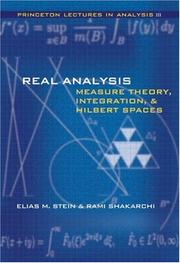 Real AnalysisElias M. Stein, Rami Shakarchi · 2005
 The Eucharistic SacrificeMortimer, Alfred G. (Alfred Garnett), 1848-1924, Carter, Thomas Thellusson, 1808-1901 · 1901
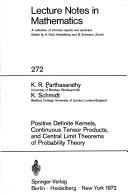 Positive definite kernels, continuous tensor products, and central limit theorems of probability theoryK. R. Parthasarathy · 1972
 Coding the MatrixPhilip N. Klein · 2013
 Positive Definite Kernels, Continuous Tensor Products, and Central Limit Theorems of Probability Theory (Lecture Notes in Mathematics)K. R. Parthasarathy, K. Schmidt · 1972
Ranked by number of editions on Open Library, a rough measure of how lasting a book is.
🔗 Related topics
- Reproducing kernel Hilbert space In functional analysis, a discipline within mathematics, a reproducing kernel Hilbert space (RKHS) is a Hilbert space of functions in which point evaluation…
- Bayesian interpretation of kernel regularization Bayesian interpretation of kernel regularization examines how kernel methods in machine learning can be understood through the lens of Bayesian statistics…
- Kernel embedding of distributions In machine learning, the kernel embedding of distributions (also called the kernel mean or mean map) comprises a class of nonparametric methods in which…
- Poisson-type random measure Poisson-type random measures are a family of three random counting measures which are closed under restriction to a subspace, i.e. closed under thinning…
- Radon transform In mathematics, the Radon transform is the integral transform which takes a function f defined on the plane to a function Rf defined on the (two-dimensional)…
- Stein discrepancy A Stein discrepancy is a statistical divergence between two probability measures that is rooted in Stein's method. It was first formulated as a tool to…
- Local system In mathematics, a local system (or a system of local coefficients) on a topological space X is a tool from algebraic topology which interpolates between…
- Kodaira–Spencer map In mathematics, the Kodaira–Spencer map, introduced by Kunihiko Kodaira and Donald C. Spencer, is a map associated to a deformation of a scheme or complex…