Live briefing
Everything about Positive affectivity
Psychological capability to respond positively
Positive affectivity (PA) is a human characteristic that describes how much people experience positive affects ; and as a consequence how they interact with others and with their surroundings. Wikipedia →
🧭 Start here: a 6-step reading path
- Read the overview: Positive affectivityA 5-minute orientation
- Skim a recent paper: How do different types and landscape attributes of urban parks affect visitors' positive emotions?Influential work since 2022
- Pick up a classic book: The optimistic childThe most-reprinted book on the subject
- Read the landmark paper: Development and validation of brief measures of positive and negative affect: The PANAS scales.Cited 31,862 times
- Go sideways: Negative affectivityA closely related topic
- Go sideways: Dispositional affectA closely related topic
📖 Definitions
No dictionary entry for this exact phrase.
🗂️ The subject at a glance
🏆 Landmark papers (most cited)
Development and validation of brief measures of positive and negative affect: The PANAS scales.
The Benefits of Frequent Positive Affect: Does Happiness Lead to Success?
Negative affectivity: The disposition to experience aversive emotional states.
The Positive and Negative Affect Schedule (PANAS): Construct validity, measurement properties and normative data in a large non‐clinical sample
🆕 Influential since 2022
How do different types and landscape attributes of urban parks affect visitors' positive emotions?
Fostering Employees’ Voluntary Green Behavior: The Role of Environmentally Specific Servant Leadership, Positive Affectivity, and Workplace Anxiety
Worry's Clout: Concern, not positive affectivity, drives climate activism
Affectivity in danish patients with emotional disorders: assessing the validity of the Positive and Negative Affect Schedule (PANAS)
How and when supervisors’ challenge appraisals impact employee bottom-line mentality? The roles of supervisor duty orientation and employee positive affectivity
📚 Books worth reading
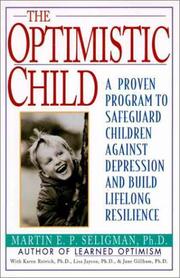 The optimistic childMartin Elias Pete Seligman · 1995
 Emotional Processing Deficits and HappinessLinden R. R. Timoney, Mark D. Holder · 2013
 Positive NeuroscienceMartin Elias Pete Seligman · 2016
Ranked by number of editions on Open Library, a rough measure of how lasting a book is.
🔗 Related topics
- Negative affectivity In psychology, negative affectivity (NA), or negative affect, is a personality variable that involves the experience of negative emotions and poor self-concept…
- Dispositional affect Dispositional affect, similar to mood, is a personality trait or overall tendency to respond to situations in stable, predictable ways. This trait is expressed…
- Emotional approach coping Emotional approach coping is a psychological construct that involves the use of emotional processing and emotional expression in response to a stressful…
- Affect (psychology) Affect, in psychology, is the underlying experience of feeling, emotion, attachment, or mood. It encompasses a wide range of emotional states and can be…
- Neuroticism Neuroticism or negativity is a personality trait with disagreement on its definition, but widely understood to be associated with negative emotions. It…
- Tripartite Model of Anxiety and Depression Watson and Clark (1991) proposed the Tripartite Model of Anxiety and Depression to help explain the comorbidity between anxious and depressive symptoms…
- Metamood Meta-mood is a term used by psychologists to refer to an individual's awareness of their emotions. The term was first utilized by John D. Mayer and Peter…
- Avoidance coping In psychology, avoidance coping is a coping mechanism and form of experiential avoidance. It is characterized by a person's efforts, conscious or unconscious…