Live briefing

Everything about Population model (evolutionary algorithm)
Population models of evolutionary algorithms
The population model of an evolutionary algorithm (EA) describes the structural properties of its population to which its members are subject. A population is the set of all proposed solutions of an EA considered in one iteration, which are also called individuals according to the biological role model. The individuals of a population can generate further individuals as offspring with the help of the genetic operators of the procedure. Wikipedia →
🧭 Start here: a 6-step reading path
- Read the overview: Population model (evolutionary algorithm)A 5-minute orientation
- Skim a recent paper: Enhanced goal direction and remodeling of population distributions multimodal multi-objective evolutionary algorithmInfluential work since 2022
- Pick up a classic book: Simulation-Based Algorithms for Markov Decision ProcessesThe most-reprinted book on the subject
- Read the landmark paper: Rigorous Analysis of Multi-Factorial Evolutionary Algorithm as Multi-Population Evolution ModelCited 20 times
- Go sideways: Evolutionary algorithmA closely related topic
- Go sideways: Premature convergenceA closely related topic
📖 Definitions
No dictionary entry for this exact phrase.
🗂️ The subject at a glance
🏆 Landmark papers (most cited)
Rigorous Analysis of Multi-Factorial Evolutionary Algorithm as Multi-Population Evolution Model
An Evolutionary Search Algorithm for Covariate Models in Population Pharmacokinetic Analysis
An Adaptive Genetic Algorithm Based on Multi-Population Parallel Evolutionary for Highway Alignment Optimization Model
Study on Diversity of Population in Game model based Co-evolutionary Algorithm for Multiobjective optimization
🆕 Influential since 2022
📚 Books worth reading
 Simulation-Based Algorithms for Markov Decision ProcessesHyeong Soo Chang · 2010
 Evolutionary Computation, Machine Learning and Data Mining in BioinformaticsLeonardo Vanneschi · 2012
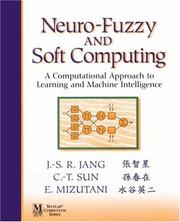 Neuro-fuzzy and soft computingJyh-Shing Roger Jang, Chuen-Tsai Sun · 1996
 SmartDataInman Harvey · 2013
 Principles of gene manipulation and genomicsS. B. Primrose · 2006
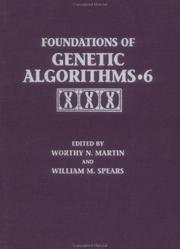 Foundations of genetic algorithms 7Kenneth A. De Jong, Riccardo Poli · 2001
 Applications of Evolutionary ComputationAnna Isabel Esparcia-Alcázar · 2013
- 📕FOGA '09Workshop on Foundations of Genetic Algorithms (10th 2009 Orlando, Fla.) · 2009
Ranked by number of editions on Open Library, a rough measure of how lasting a book is.
🔗 Related topics
- Evolutionary algorithm Evolutionary algorithms (EA) reproduce essential elements of biological evolution in a computer algorithm in order to solve "difficult" problems, at least…
- Premature convergence Premature convergence is an unwanted effect in evolutionary algorithms (EA), a metaheuristic that mimics the basic principles of biological evolution as…
- Cellular evolutionary algorithm A cellular evolutionary algorithm (cEA) is a kind of evolutionary algorithm (EA) in which individuals cannot mate arbitrarily, but every one interacts…
- Selection (evolutionary algorithm) Selection is a genetic operator in an evolutionary algorithm (EA). An EA is a metaheuristic inspired by biological evolution and aims to solve challenging…
- Evolutionary computation Evolutionary computation (EC) from computer science is a family of algorithms for global optimization inspired by biological evolution, and a subfield…
- Parallel metaheuristic Parallel metaheuristic is a class of techniques that are capable of reducing both the numerical effort[clarification needed] and the run time of a metaheuristic…
- Memetic algorithm In computer science and operations research, a memetic algorithm (MA) is an extension of an evolutionary algorithm (EA) that aims to accelerate the evolutionary…
- Genotypic and phenotypic repair Genotypic and phenotypic repair are optional components of an evolutionary algorithm (EA). An EA reproduces essential elements of biological evolution…