Live briefing
Everything about Poisson kernel
Mathematical concept
In mathematics, and specifically in potential theory, the Poisson kernel is an integral kernel, used for solving the two-dimensional Laplace equation, given Dirichlet boundary conditions on the unit disk. The kernel can be understood as the derivative of the Green's function for the Laplace equation. It is named for Siméon Poisson. Wikipedia →
🧭 Start here: a 6-step reading path
- Read the overview: Poisson kernelA 5-minute orientation
- Skim a recent paper: The Poisson kernel and the Fourier transform of the slice monogenic Cauchy kernelsInfluential work since 2022
- Pick up a classic book: The Analysis of Linear Partial Differential Operators IThe most-reprinted book on the subject
- Read the landmark paper: Poisson kernel characterization of Reifenberg flat chord arc domainsCited 63 times
- Go sideways: Hardy spaceA closely related topic
- Go sideways: Singular integral operators of convolution typeA closely related topic
📖 Definitions
No dictionary entry for this exact phrase.
🗂️ The subject at a glance
🏆 Landmark papers (most cited)
Poisson kernel characterization of Reifenberg flat chord arc domains
The Poisson Kernel on positively curved manifolds
Values ofp-adicL-functions and ap-adic Poisson kernel
An operator-valued Poisson kernel
Calculation and estimation of the Poisson kernel
The Poisson kernel for Drinfeld modular curves
The pluricomplex Poisson kernel for strongly convex domains
Nonnegativity of a discrete Poisson kernel for the Hahn polynomials
🆕 Influential since 2022
The Poisson kernel and the Fourier transform of the slice monogenic Cauchy kernels
A Tweedie Compound Poisson Model in Reproducing Kernel Hilbert Space
Function spaces via fractional Poisson kernel on Carnot groups and applications
A kernel-free boundary integral method for the nonlinear Poisson-Boltzmann equation
Asymptotics of the Poisson kernel and Green's functions of the fractional conformal Laplacian
📚 Books worth reading
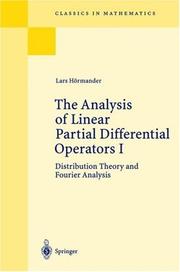 The Analysis of Linear Partial Differential Operators ILars Hörmander · 1997
 Econometrics of financial high-frequency dataNikolaus Hautsch · 2011
- 📕Structural Aspects of Quantum Field Theory and Noncommutative GeometryGerhard Grensing · 2013
- 📕Panoramas of mathematicsBronisław Jakubczyk, Bogdan Ziemian · 1995
 Empirical LikelihoodArt B. Owen · 2001
 Fourier analysisElias M. Stein · 2003
 High Performance Computing for Computational Science - VECPAR 2012Michel Daydé · 2013
- 📕Convergence results for the square root of the Poisson KernelJan-Olav Rönning · 1993
Ranked by number of editions on Open Library, a rough measure of how lasting a book is.
🔗 Related topics
- Hardy space In complex analysis, the Hardy spaces (or Hardy classes) Hp are spaces of holomorphic functions on the unit disk or upper half plane. They were introduced…
- Singular integral operators of convolution type In mathematics, singular integral operators of convolution type are the singular integral operators that arise on Rn and Tn through convolution by distributions…
- Hilbert transform In mathematics and signal processing, the Hilbert transform is a specific singular integral that takes a function, u(t) of a real variable and produces…
- Poisson summation formula In mathematics, the Poisson summation formula is an equation that relates the Fourier series coefficients of the periodic summation of a function to values…
- Harmonic analysis Harmonic analysis is an area of mathematical analysis that emerged from the study of harmonic functions, and especially their boundary behavior. The methods…
- Singular integral operators on closed curves In mathematics, singular integral operators on closed curves arise in problems in analysis, in particular complex analysis and harmonic analysis. The two…
- Fourier transform In mathematics, the Fourier transform (FT) is an integral transform that takes a function as input and outputs another function that describes the extent…
- Convolution In mathematics (in particular, functional analysis), convolution is a mathematical operation on two functions f and g that produces a third function f∗g…