Live briefing
Everything about Pointer algorithm
In computer science, a pointer algorithm is a type of algorithm that manages a linked data structure. This concept is used as a model for lower-bound proofs and specific restrictions on the linked data structure and on the algorithm's access to the structure vary. Wikipedia →
🧭 Start here: a 6-step reading path
- Read the overview: Pointer algorithmA 5-minute orientation
- Skim a recent paper: A Graph Pointer Network-Based Multi-Objective Deep Reinforcement Learning Algorithm for Solving the Traveling Salesman ProblemInfluential work since 2022
- Pick up a classic book: Modern Operating SystemsThe most-reprinted book on the subject
- Read the landmark paper: A High-Robust Automatic Reading Algorithm of Pointer Meters Based on Text DetectionCited 48 times
- Go sideways: Disjoint-set data structureA closely related topic
- Go sideways: Interval union-split-findA closely related topic
📖 Definitions
No dictionary entry for this exact phrase.
🗂️ The subject at a glance
🏆 Landmark papers (most cited)
A High-Robust Automatic Reading Algorithm of Pointer Meters Based on Text Detection
A pointer network based deep learning algorithm for unconstrained binary quadratic programming problem
A pointer location algorithm for computer visionbased automatic reading recognition of pointer gauges
A safe approximate algorithm for interprocedural pointer aliasing
Instrument Pointer Recognition Scheme Based on Improved CSL Algorithm
Research on Automatic Recognition of Pointer Meter Reading Based on Deep Learning Algorithm
Fast and accurate calibration algorithm for laser pointer tracking via structured light illumination
Pointer instrument positioning and indication recognition algorithm based on YOLOV5s
🆕 Influential since 2022
A Graph Pointer Network-Based Multi-Objective Deep Reinforcement Learning Algorithm for Solving the Traveling Salesman Problem
An Accurate Reading Algorithm for Substation Pointer Meters Based on Improved 2-D Gamma Function and PA-RetinaNet
A pointer meter reading recognition method based on improved ORB algorithm for substation inspection robot
A two-stage scheduling algorithm based on pointer network with attention mechanism for micro-nano Earth observation satellite constellation
Improvement of the reading algorithm for pointer instruments based on deep learning
📚 Books worth reading
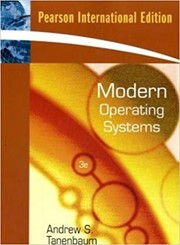 Modern Operating SystemsAndrew S. Tanenbaum, Herbert Bos · 1992
 C How to ProgramPaul J. Deitel, Harvey M. Deitel · 2007
 Invitation to Computer ScienceG. Michael Schneider, Judith L. Gersting · 1995
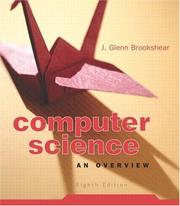 Computer scienceJ. Glenn Brookshear, Brookshear · 1985
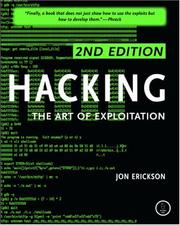 HackingJon Erickson, Jon Erickson · 2003
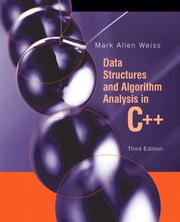 Data structures and algorithm analysis in CMark Allen Weiss · 1993
 Software EssentialsAdair Dingle · 2014
 Mastering algorithms with CKyle Loudon, Andy Oram · 1999
Ranked by number of editions on Open Library, a rough measure of how lasting a book is.
🔗 Related topics
- Disjoint-set data structure In computer science, a disjoint-set data structure, also called a union–find data structure or merge–find set, is a data structure that stores a collection…
- Interval union-split-find In computer science, an interval union-split-find data structure is a data structure that stores a partition of the integer interval [1,n] into intervals…
- Cell-probe model In computer science, the cell-probe model is a model of computation similar to the random-access machine, except that all operations are free except memory…
- Fibonacci heap In computer science, a Fibonacci heap is a data structure for priority queue operations, consisting of a collection of heap-ordered trees. It has a better…
- Brodal queue In computer science, the Brodal queue is a heap/priority queue structure with very low worst case time bounds: O(1) for insertion, find-minimum, meld (merge…
- Pairing heap A pairing heap is a type of heap data structure with relatively simple implementation and excellent practical amortized performance, introduced by Michael…
- Tarjan's off-line lowest common ancestors algorithm In computer science, Tarjan's off-line lowest common ancestors algorithm is an algorithm for computing lowest common ancestors for pairs of nodes in a…
- Branch and bound Branch-and-bound (BB, B&B, or BnB) is a method for solving optimization problems by breaking them down into smaller subproblems and using a bounding function…