Everything about Phase stretch transform

Phase stretch transform (PST) is a computational approach to signal and image processing. One of its utilities is for feature detection and classification. PST is related to time stretch dispersive Fourier transform. It transforms the image by emulating propagation through a diffractive medium with engineered 3D dispersive property. The operation relies on symmetry of the dispersion profile and can be understood in terms of dispersive eigenfunctions or stretch modes. PST performs similar functionality as phase-contrast microscopy, but on digital images. PST can be applied to digital images and temporal data. It is a physics-based feature engineering algorithm. Wikipedia →
🧭 Start here: a 6-step reading path
- Read the overview: Phase stretch transformA 5-minute orientation
- Skim a recent paper: Multistage Crystal Transformation and Mechanism of PA1012 γ′ Phase by Uniaxial StretchInfluential work since 2022
- Pick up a classic book: The Conspirators HierarchyThe most-reprinted book on the subject
- Read the landmark paper: Edge Detection in Digital Images Using Dispersive Phase Stretch TransformCited 50 times
- Go sideways: Anamorphic stretch transformA closely related topic
- Go sideways: PhyCVA closely related topic
📖 Definitions
No dictionary entry for this exact phrase.
🏆 Landmark papers (most cited)
Edge Detection in Digital Images Using Dispersive Phase Stretch Transform
Image segmentation of activated sludge phase contrast images using phase stretch transform
Phase stretch transform for super-resolution localization microscopy
Super-Resolution Based on Residual Learning and Optimized Phase Stretch Transform
Anisotropic Phase Stretch Transform-Based Algorithm for Segmentation of Activated Sludge Phase-Contrast Microscopic Image
An Image Enhancement Algorithm Based on Fractional‐Order Phase Stretch Transform and Relative Total Variation
A new approach for sensitivity improvement of retinal blood vessel segmentation in high-resolution fundus images based on phase stretch transform
Visual sensor image enhancement based on non-sub-sampled shearlet transform and phase stretch transform
🆕 Influential since 2022
📚 Books worth reading
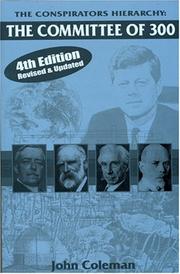 The Conspirators HierarchyJohn Coleman · 1992
 History of the World's FairBenjamin Cummings Truman · 1893
 Rethinking the rule of law after communismAdam W. Czarnota, Martin Krygier · 2005
 Awareness Techniques - Book 1William Swygard · 1975
 A TOUR OF THE WORLDMalik Mansab Khan, Muhammad Rafique Abdul Aziz · 2025
Ranked by number of editions on Open Library, a rough measure of how lasting a book is.
🔗 Related topics
- Anamorphic stretch transform An anamorphic stretch transform (AST) also referred to as warped stretch transform is a physics-inspired signal transform that emerged from time stretch…
- PhyCV PhyCV is the first computer vision library which utilizes algorithms directly derived from the equations of physics governing physical phenomena. The algorithms…
- Time-stretch analog-to-digital converter The time-stretch analog-to-digital converter (TS-ADC), also known as the time-stretch enhanced recorder (TiSER), is an analog-to-digital converter (ADC)…
- Time stretch dispersive Fourier transform Time stretch dispersive Fourier transform (TS-DFT), otherwise known as time-stretch transform (TST), temporal Fourier transform or photonic time-stretch…
- Edge detection Edge detection includes a variety of mathematical methods that aim at identifying edges, defined as curves in a digital image at which the image brightness…
- Hilbert transform In mathematics and signal processing, the Hilbert transform is a specific singular integral that takes a function, u(t) of a real variable and produces…
- Serial time-encoded amplified microscopy Time stretch microscopy, also known as serial time-encoded amplified imaging/microscopy or stretched time-encoded amplified imaging/microscopy' (STEAM)…
- Gaussian filter In electronics and signal processing, mainly in digital signal processing, a Gaussian filter is a filter whose impulse response is a Gaussian function…