Live briefing
Everything about Petascale computing
Computer systems capable of one petaFLOPS
Petascale computing refers to high-power computing systems capable of performing at least 1 quadrillion (1015) arithmetic, or floating-point operations per second (FLOPS). (Note: FLOPS is a standard metric for supercomputer performance.) These systems are often called petaflops systems and represent a significant leap from traditional supercomputers in terms of raw performance, enabling them to handle vast datasets and complex computations. Wikipedia →
🧭 Start here: a 6-step reading path
- Read the overview: Petascale computingA 5-minute orientation
- Skim a recent paper: Petascale Cloud Supercomputing for Terapixel Visualization of a Digital TwinInfluential work since 2022
- Pick up a classic book: Contemporary High Performance ComputingThe most-reprinted book on the subject
- Read the landmark paper: Understanding failures in petascale computersCited 216 times
- Go sideways: Fugaku (supercomputer)A closely related topic
- Go sideways: TOP500A closely related topic
📖 Definitions
No dictionary entry for this exact phrase.
🗂️ The subject at a glance
🏆 Landmark papers (most cited)
Understanding failures in petascale computers
Petascale computational systems
Spiking network simulation code for petascale computers
Message passing interface and multithreading hybrid for parallel molecular docking of large databases on petascale high performance computing machines
Optimizing Code_Saturne computations on Petascale systems
Sparc64 VIIIfx: A New-Generation Octocore Processor for Petascale Computing
The quest for petascale computing
Interconnection Networks in Petascale Computer Systems
🆕 Influential since 2022
📚 Books worth reading
 Contemporary High Performance ComputingJeffrey S. Vetter · 2013
 Petascale ComputingDavid A. Bader · 2007
- 📕Contemporary High Performance ComputingJeffrey S. Vetter · 2013
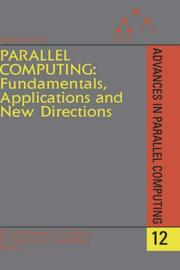 Parallel computingG. R. Joubert, Frans Peters · 1998
 Eigenvalue Problems : Algorithms, Software and Applications in Petascale ComputingTetsuya Sakurai, Shao-Liang Zhang · 2018
 High Performance Computing for Computational Science - VECPAR 2012Michel Daydé · 2013
 Euro-Par 2006: Parallel ProcessingWolfgang Lehner · 2007
- 📕Euro-Par 2006 Workshops : Parallel ProcessingWolfgang Lehner, Norbert Meyer · 2007
Ranked by number of editions on Open Library, a rough measure of how lasting a book is.
🔗 Related topics
- Fugaku (supercomputer) Fugaku (Japanese: 富岳) is a petascale supercomputer at the Riken Center for Computational Science in Kobe, Japan. It started development in 2014 as the…
- TOP500 The TOP500 project ranks and details the 500 most powerful non-distributed computer systems in the world. The project was started in 1993 and publishes…
- High-performance computing High-performance computing (HPC) is the use of supercomputers and computer clusters to solve advanced problems. HPC integrates systems administration (including…
- Floating point operations per second Floating point operations per second (FLOPS, flops or flop/s) is a measure of computer performance or compute in computing, useful in fields of scientific…
- Exascale computing Exascale computing refers to computing systems capable of calculating at least 1018 IEEE 754 double precision (64-bit) operations (multiplications and/or…
- RIKEN MDGRAPE-3 RIKEN MDGRAPE-3 is an ultra-high performance petascale supercomputer system developed by the Riken research institute in Japan. It is a special purpose…
- LINPACK benchmarks The LINPACK benchmarks are a measure of a system's floating-point computing power. Introduced by Jack Dongarra, they measure how fast a computer solves…
- Zettascale computing Zettascale computing refers to computing systems capable of calculating at least "1021 IEEE 754 Double Precision (64-bit) operations (multiplications and/or…