Everything about Personal software process
Process to improve programming quality

The Personal Software Process (PSP) is a structured software development process that is designed to help software engineers better understand and improve their performance by bringing discipline to the way they develop software and tracking their predicted and actual development of the code. It clearly shows developers how to manage the quality of their products, how to make a sound plan, and how to make commitments. It also offers them the data to justify their plans. They can evaluate their work and suggest improvement direction by analyzing and reviewing development time, defects, and size data. The PSP was created by Watts Humphrey to apply the underlying principles of the Software Engineering Institute's (SEI) Capability Maturity Model (CMM) to the software development practices of a single developer. It claims to give software engineers the process skills necessary to work on a team software process (TSP) team. Wikipedia →
🧭 Start here: a 6-step reading path
- Read the overview: Personal software processA 5-minute orientation
- Skim a recent paper: Privacy-aware sharing and collaborative analysis of personal wellness data: Process model, domain ontology, software system and user trialInfluential work since 2022
- Pick up a classic book: Interactive Computing SeriesThe most-reprinted book on the subject
- Read the landmark paper: Using a defined and measured Personal Software ProcessCited 71 times
- Go sideways: Watts HumphreyA closely related topic
- Go sideways: Team software processA closely related topic
📖 Definitions
No dictionary entry for this exact phrase.
🗂️ The subject at a glance
🏆 Landmark papers (most cited)
Using a defined and measured Personal Software Process
Results of applying the Personal Software Process
An experiment measuring the effects of personal software process (PSP) training
Introducing the personal software process
The personal software process: a cautionary case study
The personal software process: status and trends
An experience report on the personal software process
Software process improvement—A personal view: How it started and where it is going
🆕 Influential since 2022
Privacy-aware sharing and collaborative analysis of personal wellness data: Process model, domain ontology, software system and user trial
The Personal Software Process in the Generative AI Era
Evaluating Instructor Role in a Personal Software Process Improvement Course Based on the Process Data
Improving Motivation Control in Personal Software Process Education Course with a Qualitative Approach
📚 Books worth reading
 Interactive Computing SeriesKenneth C. Laudon · 1997
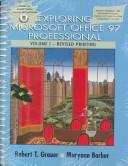 Exploring Microsoft Office 97 ProfessionalRobert T. Grauer, Maryann Barber · 1997
 Smart business systems for the optimized organizationRobert J Thierauf, Robert J. Thierauf · 2002
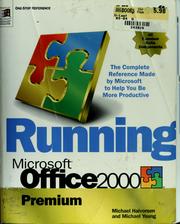 Running Microsoft Office 2000Michael Halvorson · 1999
 Adobe Acrobat 6 PDF for DummiesGreg Harvey · 2003
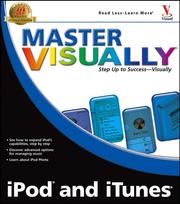 Master visually iPod and iTunesBonnie Blake, Doug Sahlin · 2005
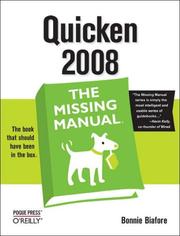 Quicken 2008Bonnie Biafore · 2007
 Whole earth software catalogStewart Brand · 1984
Ranked by number of editions on Open Library, a rough measure of how lasting a book is.
🔗 Related topics
- Watts Humphrey Watts S. Humphrey (July 4, 1927 – October 28, 2010) was an American pioneer in software engineering who was called the "father of software quality." Watts…
- Team software process In combination with the personal software process (PSP), the team software process (TSP) provides a defined operational process framework that is designed…
- Software Engineering Institute Software Engineering Institute (SEI) is a federally funded research and development center in Pittsburgh, Pennsylvania, United States. Founded in 1984…
- Proxy-based estimating Proxy-Based Estimating (PROBE) is an estimating process used in the Personal Software Process (PSP) to estimate size and effort. Proxy Based Estimating…
- Bill Curtis Bill Curtis (born 1948) is a software scientist best known for leading the development of the Capability Maturity Model and the People CMM in the Software…
- Project management software Project management software are computer programs that help plan, organize, and manage resources. Depending on the sophistication of the software, it can…
- Velocity (software development) Velocity is a term used to describe the rate at which software development progresses. For development teams that rely upon Issue Tracker software (e.g…
- Software testing Software testing is the act of checking whether software meets its intended objectives and satisfies expectations. Software testing can provide objective…