Live briefing
Everything about Persianization
Cultural assimilation of Persian traits
Persianization or Persification, is a sociological process of cultural change in which a non-Persian society becomes "Persianate", meaning it either directly adopts or becomes strongly influenced by the Persian language, culture, literature, art, music, and identity as well as other socio-cultural factors. It is a specific form of cultural assimilation that often includes a language shift. The term applies not only to cultures, but also to individuals, as they acclimate to Persian culture and become "Persianized" or "Persified". Wikipedia →
🧭 Start here: a 6-step reading path
- Read the overview: PersianizationA 5-minute orientation
- Pick up a classic book: RubāʻīyātThe most-reprinted book on the subject
- Read the landmark paper: What about Translation? Beyond “Persianization” as the Language Policy in IranCited 16 times
- Go sideways: Pan-IranismA closely related topic
- Go sideways: Pan-TurkismA closely related topic
📖 Definitions
No dictionary entry for this exact phrase.
🗂️ The subject at a glance
🏆 Landmark papers (most cited)
What about Translation? Beyond “Persianization” as the Language Policy in Iran
The Persianization of Itihasa: Performance Narratives and Mughal Political Culture in Eighteenth-Century Bengal
The Persianization of English in multilingual Tehran
The Persianization of Koroglu: Banditry and Royalty in Three Versions of the Koroglu "Destan"
Persianization of Shaykhīsm: The Doctrine of Rukn‐i Rābiʿ from Aḥmad al‐Aḥsāʾī to Karīm Khān Kirmānī
The Cultures of History in Early Modern India: Persianization and Mughal Culture in Bengal
Book Review: The Cultures of History in Early Modern Bengal: Persianization and Mughal Culture in Bengal
The Memory Destruction and Reconstruction Games within the Scope of Persianization Politics in Iran
📚 Books worth reading
 RubāʻīyātOmar Khayyam · 1870
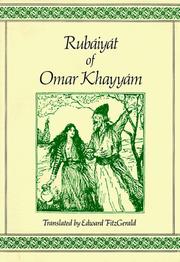 Rubaiyat of Omar KhayyamOmar Khayyam · 1859
 گُلِستانSaʻdī. · 1700
 Arabian medicineEdward Granville Browne · 1899
 Būstān-i Shaykh Muṣliḥ al-Dīn Saʻdī Shīrāzī, maʻah farhang va sharḥ-i Mawlavī Tamīz al-DīnSaʻdī., A. Hart Edwards · 1851
 Πέρσαι (Persai, Persae)Aeschylus · 1816
 Mas̲navīRumi (Jalāl ad-Dīn Muḥammad Balkhī), Camille Adams Helminski · 1851
 ShāhnāmahFerdowsi, Amin Banani · 1829
Ranked by number of editions on Open Library, a rough measure of how lasting a book is.
🔗 Related topics
- Pan-Iranism Pan-Iranism (Persian: پانایرانیسم) is a nationalist ideology that espouses the necessity of socio-cultural intimacy between all Iranian peoples. According…
- Pan-Turkism Pan-Turkism (Turkish: Pan-Türkizm) or Turkism (Turkish: Türkçülük or Türkizm) is a political movement that emerged during the 1880s among Turkic intellectuals…
- Iranian Azerbaijanis This article contains special characters. Without proper rendering support, you may see question marks, boxes, or other symbols. Iranian Azerbaijanis are…
- Pashtunization Pashtunization (Pashto: پښتون جوړونه), is a process of cultural or linguistic change in which someone or something non-Pashtun becomes acculturated or…
- Hazaras Hazaras are an ethnic group primarily residing in the Hazarajat (Hazaristan) region in central Afghanistan. They are one of the largest ethnic groups in…
- Turco-Persian tradition KARAKHANID KHANATE CUMANS KHAZARS KIMEKS KHITAN EMPIRE 1000 QOCHO KHOTAN GHAZNAVID EMPIRE HINDU SHAHIS BUYIDS WESTERN CHALUKYAS PALA EMPIRE OGHUZ YABGUS…
- Dari This article contains Persian text. Without proper rendering support, you may see question marks, boxes, or other symbols. Dari, also known as Farsi Dari…
- Azerbaijani national identity Azerbaijani national identity is a term referring to the sense of national identity, as embodied in the shared and characteristic culture, language and…