Live briefing
Everything about Path (computing)
Text that identifies an item in a computer file system
A path is a string that uniquely identifies an item in a hierarchical file system. Generally, a path is composed of directory names, special format specifiers, and optionally a filename, all separated by delimiters. This delimiter can vary by operating system, but popular, modern systems use the slash /, backslash \, or colon :. Wikipedia →
🧭 Start here: a 6-step reading path
- Read the overview: Path (computing)A 5-minute orientation
- Skim a recent paper: Multi-UAV Mobile Edge Computing and Path Planning Platform Based on Reinforcement LearningInfluential work since 2022
- Pick up a classic book: OSPF and IS-ISThe most-reprinted book on the subject
- Read the landmark paper: The Path to Scalable Distributed Quantum ComputingCited 189 times
- Go sideways: File URI schemeA closely related topic
- Go sideways: FilenameA closely related topic
📖 Definitions
No dictionary entry for this exact phrase.
🗂️ The subject at a glance
🏆 Landmark papers (most cited)
The Path to Scalable Distributed Quantum Computing
A Strategic Value Appropriation Path for Cloud Computing
GPU computing for accelerating the numerical Path Integration approach
On computing a longest path in a tree
Stackelberg security games: Computing the shortest-path equilibrium
Memory-saving memetic computing for path-following mobile robots
Schedule path optimization for adiabatic quantum computing and optimization
Computing Individual Path Marginal Cost in Networks with Queue Spillbacks
🆕 Influential since 2022
Multi-UAV Mobile Edge Computing and Path Planning Platform Based on Reinforcement Learning
Drone Swarm Path Planning for Mobile Edge Computing in Industrial Internet of Things
Secure Hot Path Crowdsourcing With Local Differential Privacy Under Fog Computing Architecture
Computing transition path theory quantities with trajectory stratification
Multi-Path Transmission Protocol for Video Streaming Over Vehicular Fog Computing Environments
📚 Books worth reading
- 📕OSPF and IS-ISRui Valadas · 2019
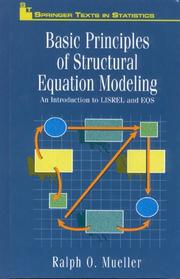 Basic principles of structural equation modelingRalph O. Mueller · 1996
- 📕Planning fuel-conservative descents in an airline environment using a small programmable calculatorCharles E. Knox · 1985
 Creative PhotoshopDerek Lea · 2007
- 📕A comparison of time-optimal interception trajectories for the F-8 and F-15Anthony J. Calise · 1990
 Plotter subroutine for meteorological flight path (PATH)Heinz H. Grote · 1969
 LISREL VIK. G. Jöreskog, Karl G. Joreskog · 1983
 Project Management System (PMS) through the use of the Critical Path Method (CPM)Douglas M. Reid · 1973
Ranked by number of editions on Open Library, a rough measure of how lasting a book is.
🔗 Related topics
- File URI scheme file is a Uniform Resource Identifier (URI) scheme used to identify a resource in a file system. A file URI has the format file://host/path where host…
- Filename A filename is used to uniquely identify a computer file in a file system. Different file systems impose different restrictions on filename lengths. A filename…
- Filename mangling The process of filename mangling, in computing, involves a translation of the file name for compatibility at the operating system level. It occurs when…
- Long filename Long filename (LFN) support is Microsoft's backward-compatible extension of the 8.3 filename (short filename) naming scheme used in MS-DOS. Long filenames…
- Directory (computing) In computing, a directory is a file system cataloging structure that contains references to other computer files, and possibly other directories. On many…
- Case sensitivity In computers, case sensitivity defines whether uppercase and lowercase letters are treated as distinct (case-sensitive) or equivalent (case-insensitive)…
- Directory structure In computing, a directory structure is the way an operating system arranges files that are accessible to the user. Files are typically displayed by filename…
- 8.3 filename An 8.3 filename (also called a short filename or SFN) is one that obeys the filename convention used by CP/M and old versions of DOS and versions of Microsoft…