Everything about Parapatric speciation
Speciation within a population where subpopulations are reproductively isolated

In parapatric speciation, two subpopulations of a species evolve reproductive isolation from one another while continuing to exchange genes. This mode of speciation has three distinguishing characteristics: 1) mating occurs non-randomly, 2) gene flow occurs unequally, and 3) populations exist in either continuous or discontinuous geographic ranges. This distribution pattern may be the result of unequal dispersal, incomplete geographical barriers, or divergent expressions of behavior, among other things. Parapatric speciation predicts that hybrid zones will often exist at the junction between the two populations. Wikipedia →
🧭 Start here: a 6-step reading path
- Read the overview: Parapatric speciationA 5-minute orientation
- Skim a recent paper: A low‐latitude species pump: Peripheral isolation, parapatric speciation and mating‐system evolution converge in a marine radiationInfluential work since 2022
- Pick up a classic book: How and why species multiplyThe most-reprinted book on the subject
- Read the landmark paper: Sympatric, parapatric or allopatric: the most important way to classify speciation?Cited 321 times
- Go sideways: Allopatric speciationA closely related topic
- Go sideways: History of speciationA closely related topic
🏆 Landmark papers (most cited)
Sympatric, parapatric or allopatric: the most important way to classify speciation?
The Limits to Parapatric Speciation: Dobzhansky–Muller Incompatibilities in a Continent–Island Model
PATTERNS OF PARAPATRIC SPECIATION
Rapid parapatric speciation on holey adaptive landscapes
Adaptive Dynamics in a 2-Patch Environment: A Toy Model for Allopatric and Parapatric Speciation
Waiting time to parapatric speciation
Deep genetic divergences among morphologically similar and parapatric Skistodiaptomus (Copepoda: Calanoida: Diaptomidae) challenge the hypothesis of Pleistocene speciation
Parapatric divergence of sympatric morphs in a salamander: incipient speciation on Long Island?
🆕 Influential since 2022
A low‐latitude species pump: Peripheral isolation, parapatric speciation and mating‐system evolution converge in a marine radiation
Patterns of speciation in a parapatric pair of Saturnia moths as revealed by target capture
Allopatric speciation is more prevalent than parapatric ecological divergence in a recent high-Andean diversification ( Linochilus: Asteraceae)
Parapatric speciation with recurrent gene flow of two sexual dichromatic pheasants
Parapatric speciation of Meiothermus in serpentinite-hosted aquifers in Oman
📚 Books worth reading
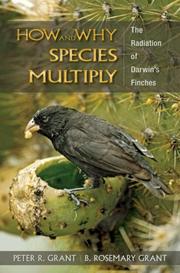 How and why species multiplyPeter R. Grant · 2007
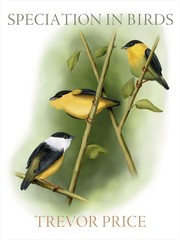 Speciation in BirdsTrevor Price · 2007
- 📕Sex chromosomes · 2009
Ranked by number of editions on Open Library, a rough measure of how lasting a book is.
🔗 Related topics
- Allopatric speciation Allopatric speciation is a mode of speciation that occurs when biological populations become geographically isolated from each other to an extent that…
- History of speciation The scientific study of speciation — how species evolve to become new species — began around the time of Charles Darwin in the middle of the 19th century…
- Reinforcement (speciation) Reinforcement is a process of speciation where natural selection increases the reproductive isolation (further divided to pre-zygotic isolation and post-zygotic…
- Speciation Speciation is the evolutionary process by which populations evolve to become distinct species. The biologist Orator F. Cook coined the term in 1906 for…
- Sympatric speciation Sympatric speciation is the evolution of a new species from a surviving ancestral species while both continue to inhabit the same geographic region. In…
- Hybrid zone A hybrid zone exists where two species or diverged intraspecific lineages admix continuously but incompletely, maintaining the genetic integrity of both…
- Sympatry Look up sympatry in Wiktionary, the free dictionary. In biology, two closely related species or populations are considered sympatric when they exist in…
- Evidence for speciation by reinforcement Reinforcement is a process within speciation where natural selection increases the reproductive isolation between two populations of species by reducing…