Everything about Parallel analysis
Statistical method
Parallel analysis, also known as Horn's parallel analysis, is a statistical method used to determine the number of components to keep in a principal component analysis or factors to keep in an exploratory factor analysis. It is named after psychologist John L. Horn, who created the method, publishing it in the journal Psychometrika in 1965. The method compares the eigenvalues generated from the data matrix to the eigenvalues generated from a Monte-Carlo simulated matrix created from random data of the same size. Horn developed the method as a correction to the Kaiser criterion, arguing that sampling error and least-squares capitalization inflate eigenvalues in sample data, causing the Kaiser rule to overestimate the number of factors to retain. Wikipedia →
🧭 Start here: a 6-step reading path
- Read the overview: Parallel analysisA 5-minute orientation
- Skim a recent paper: Generalized Analysis of Load-Independent ZCS Parallel-Resonant InverterInfluential work since 2022
- Pick up a classic book: Job scheduling strategies for parallel processingThe most-reprinted book on the subject
- Read the landmark paper: PARAFAC: Parallel factor analysisCited 447 times
- Go sideways: Exploratory factor analysisA closely related topic
- Go sideways: Factor analysisA closely related topic
📖 Definitions
No dictionary entry for this exact phrase.
🗂️ The subject at a glance
🏆 Landmark papers (most cited)
PARAFAC: Parallel factor analysis
Remarks on Parallel Analysis
Determining Parallel Analysis Criteria
How Parallel Is Parallel Evolution? A Comparative Analysis in Fishes
Performance analysis of parallel processing systems
Parallel Nanoliter Microfluidic Analysis System
Analysis of series-parallel resonant converter
Solving awari with parallel retrograde analysis
🆕 Influential since 2022
Generalized Analysis of Load-Independent ZCS Parallel-Resonant Inverter
Forward Kinematic Analysis of Spatial Parallel Robots Using a Parallel Evolutionary Neural Networks
Traveler: Navigating Task Parallel Traces for Performance Analysis
Comparative Analysis of XGBoost Performance for Text Classification with CPU Parallel and Non-Parallel Processing
Analysis of interactions among parallel grid-forming inverters
📚 Books worth reading
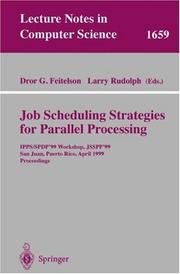 Job scheduling strategies for parallel processingJSSPP'99 (1999 San Juan, P.R.), IPPS/SPDP '98 Workshop (1998 Orlando, Fla.) · 1995
 Parallel Processing and Applied MathematicsRoman Wyrzykowski · 2003
 Parallel Computing TechnologiesVictor Malyshkin · 2003
 Parallel algorithmsHenri Casanova, Armand Legrand · 2008
 Computational MathematicsRobert E. White · 2003
 Parallel iterative algorithmsJacques Mohcine Bahi · 2007
 Numerical recipes in Fortran 90William H. Press, Saul A. Teukolsky · 1996
- 📕Bi-Level Integrated System Synthesis (BLISS)Jaroslaw Sobieszczanski-Sobieski · 1998
Ranked by number of editions on Open Library, a rough measure of how lasting a book is.
🔗 Related topics
- Exploratory factor analysis In multivariate statistics, exploratory factor analysis (EFA) is a statistical method used to uncover the underlying structure of a relatively large set…
- Factor analysis Factor analysis is a statistical method used to describe variability among observed, correlated variables in terms of a potentially lower number of unobserved…
- Scree plot In multivariate statistics, a scree plot is a line plot of the eigenvalues of factors or principal components in an analysis. The scree plot is used to…
- Psychometrika Psychometrika is the official journal of the Psychometric Society, a professional body dedicated to psychometrics and quantitative psychology. The journal…
- Confirmatory factor analysis In statistics, confirmatory factor analysis (CFA) is a special form of factor analysis, most commonly used in social science research. It is used to test…
- Kaiser–Meyer–Olkin test The Kaiser–Meyer–Olkin (KMO) test is a statistical measure to determine how suited data is for factor analysis. The test measures sampling adequacy for…
- Psychological statistics Psychological statistics is application of formulas, theorems, numbers and laws to psychology. Statistical methods for psychology include development and…
- Anton Formann Anton K. Formann (August 27, 1949, Vienna, Austria – July 12, 2010, Vienna) was an Austrian research psychologist, statistician, and psychometrician. He…