Live briefing
Everything about Parallel algorithms for minimum spanning trees
In graph theory a minimum spanning tree (MST) of a graph with and is a tree subgraph of that contains all of its vertices and is of minimum weight. Wikipedia →
🧭 Start here: a 6-step reading path
- Read the overview: Parallel algorithms for minimum spanning treesA 5-minute orientation
- Pick up a classic book: Introduction to AlgorithmsThe most-reprinted book on the subject
- Read the landmark paper: A parallel algorithm for constructing minimum spanning treesCited 57 times
- Go sideways: Karger's algorithmA closely related topic
- Go sideways: Expander codeA closely related topic
📖 Definitions
No dictionary entry for this exact phrase.
🗂️ The subject at a glance
🏆 Landmark papers (most cited)
A parallel algorithm for constructing minimum spanning trees
An O(log n) algorithm for parallel update of minimum spanning trees
Optimal parallel algorithms for multiple updates of minimum spanning trees
Parallel algorithms for computing maximal independent sets in trees and for updating minimum spanning trees
A Parallel Algorithm for Computing Minimum Spanning Trees
An adaptive and cost-optimal parallel algorithm for minimum spanning trees
Simple and Work-Efficient Parallel Algorithms for the Minimum Spanning Tree Problem
Parallel Algorithms for Minimum Spanning Tree Problem
📚 Books worth reading
 Introduction to AlgorithmsThomas H. Cormen, Charles E. Leiserson · 1990
 Computer algorithmsEllis Horowitz · 1997
 Fundamentals of data structures in CEllis Horowitz · 1993
 Fundamentals of computer algorithmsEllis Horowitz · 1978
 Algorithm designMichael T. Goodrich, Roberto Tamassia · 2001
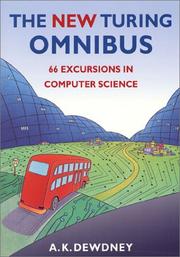 The (new) turing omnibusA.K. Dewdney · 1993
 GPU computing gemsWen-mei Hwu · 2011
 Fundamentals of data structures in CEllis Horowitz · 2008
Ranked by number of editions on Open Library, a rough measure of how lasting a book is.
🔗 Related topics
- Karger's algorithm In computer science and graph theory, Karger's algorithm is a randomized algorithm to compute a minimum cut of a connected graph. It was invented by David…
- Expander code In coding theory, expander codes form a class of error-correcting codes that are constructed from bipartite expander graphs. Along with Justesen codes…
- Zemor's decoding algorithm In coding theory, Zemor's algorithm, designed and developed by Gilles Zémor, is a recursive low-complexity approach to code construction. It is an improvement…
- Packing in a hypergraph In mathematics, a packing in a hypergraph is a partition of the set of the hypergraph's edges into a number of disjoint subsets such that no pair of edges…
- Reachability In graph theory, reachability refers to the ability to get from one vertex to another within a graph. A vertex s {\displaystyle s} can reach a vertex t…
- Distributed minimum spanning tree The distributed minimum spanning tree (MST) problem involves the construction of a minimum spanning tree by a distributed algorithm, in a network where…
- Kruskal's algorithm Kruskal's algorithm finds a minimum spanning forest of an undirected edge-weighted graph. If the graph is connected, it finds a minimum spanning tree.…
- Loop-erased random walk In mathematics, loop-erased random walk is a model for a random simple path with important applications in combinatorics, physics and quantum field theory…