Everything about P-value
Function of the observed sample results
In null-hypothesis significance testing, the p-value is the probability of obtaining test results at least as extreme as the result actually observed, under the assumption that the null hypothesis is correct. A very small p-value means that such an extreme observed outcome would be very unlikely under the null hypothesis. Even though reporting p-values of statistical tests is common practice in academic publications of many quantitative fields, misinterpretation and misuse of p-values is widespread and has been a major topic in mathematics and metascience. Wikipedia →
🧭 Start here: a 6-step reading path
- Read the overview: P-valueA 5-minute orientation
- Skim a recent paper: A Comprehensive Measurement of the Local Value of the Hubble Constant with 1 km s −1 Mpc −1 Uncertainty from the Hubble Space Telescope and the SH0ES TeamInfluential work since 2022
- Pick up a classic book: Zen and the Art of Motorcycle MaintenanceThe most-reprinted book on the subject
- Read the landmark paper: Consumer Perceptions of Price, Quality, and Value: A Means-End Model and Synthesis of EvidenceCited 27,702 times
- Go sideways: One- and two-tailed testsA closely related topic
- Go sideways: Statistical hypothesis testA closely related topic
📖 Definitions
Noun In statistical significance testing, the probability of obtaining a test statistic at least as extreme as the one that was actually observed, assuming that the null hypothesis is true.
🗂️ The subject at a glance
🏆 Landmark papers (most cited)
Consumer Perceptions of Price, Quality, and Value: A Means-End Model and Synthesis of Evidence
The value of the world's ecosystem services and natural capital
On the Relation between the Expected Value and the Volatility of the Nominal Excess Return on Stocks
Numerical solution of initial boundary value problems involving maxwell's equations in isotropic media
Prediction of Total Genetic Value Using Genome-Wide Dense Marker Maps
Sensitivity Analysis in Observational Research: Introducing the E-Value
MissForest—non-parametric missing value imputation for mixed-type data
Optimization of conditional value-at-risk
🆕 Influential since 2022
A Comprehensive Measurement of the Local Value of the Hubble Constant with 1 km s −1 Mpc −1 Uncertainty from the Hubble Space Telescope and the SH0ES Team
Sustainable development, ESG performance and company market value: Mediating effect of financial performance
Unlocking the value of artificial intelligence in human resource management through AI capability framework
Quantifying the global burden of mental disorders and their economic value
Impact of ESG performance on firm value and profitability
📚 Books worth reading
 Zen and the Art of Motorcycle MaintenanceRobert M. Pirsig · 1974
 Bowes & Church's food values of portions commonly usedJean A. Thompson Pennington, Jean AT Pennington · 2004
 Values and visionsSally Burns, Georgeanne Lamont · 1995
 Redefining health careMichael E. Porter · 2006
 Formally p-adic fieldsA. Prestel · 1984
 Bounds on transfer principles for algebraically closed and complete discretely valued fieldsScott Shorey Brown · 1978
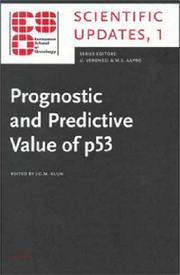 Prognostic and predictive value of p53Klijn · 1997
- 📕The future of competitionC. K Prahalad · 2004
Ranked by number of editions on Open Library, a rough measure of how lasting a book is.
🔗 Related topics
- One- and two-tailed tests In statistical significance testing, a one-tailed test and a two-tailed test are alternative ways of computing the statistical significance of a parameter…
- Statistical hypothesis test A statistical hypothesis test is a method of statistical inference used to decide whether the data provides sufficient evidence to reject a particular…
- Q-value (statistics) In statistical hypothesis testing, specifically multiple hypothesis testing, the q-value in the Storey procedure provides a means to estimate the positive…
- Fisher's exact test Fisher's exact test (also the Fisher–Irwin test) is a statistical significance test used in the analysis of contingency tables. Although in practice it…
- Exact test An exact (significance) test is a statistical test such that if the null hypothesis is true, then all assumptions made during the derivation of the distribution…
- Statistical significance In statistical hypothesis testing, a result has statistical significance when a result at least as extreme would be very infrequent if the null hypothesis…
- Binomial test Binomial test is an exact test of the statistical significance of deviations from a theoretically expected distribution of observations into two categories…
- Statistical proof Statistical proof is the rational demonstration of degree of certainty for a proposition, hypothesis or theory that is used to convince others subsequent…