Everything about Organizational commitment
Concept in organizational behavior

In organizational behavior and industrial and organizational psychology, organizational commitment is an individual's psychological attachment to the organization. Organizational scientists have also developed many nuanced definitions of organizational commitment, and numerous scales to measure them. Exemplary of this work is Meyer and Allen's model of commitment, which was developed to integrate numerous definitions of commitment that had been proliferated in the literature. Meyer and Allen's model has also been critiqued because the model is not consistent with empirical findings. It may also not be fully applicable in domains such as customer behavior. There has also been debate surrounding what Meyers and Allen's model was trying to achieve. Wikipedia →
🧭 Start here: a 6-step reading path
- Read the overview: Organizational commitmentA 5-minute orientation
- Skim a recent paper: The role of green innovation on environmental and organizational performance: Moderation of human resource practices and management commitmentInfluential work since 2022
- Pick up a classic book: Conscious BusinessThe most-reprinted book on the subject
- Read the landmark paper: The measurement and antecedents of affective, continuance and normative commitment to the organizationCited 6,886 times
- Go sideways: Affective events theoryA closely related topic
- Go sideways: Organizational justiceA closely related topic
📖 Definitions
No dictionary entry for this exact phrase.
🏆 Landmark papers (most cited)
The measurement and antecedents of affective, continuance and normative commitment to the organization
A three-component conceptualization of organizational commitment
The measurement of organizational commitment
Affective, Continuance, and Normative Commitment to the Organization: A Meta-analysis of Antecedents, Correlates, and Consequences
Job Satisfaction and Organizational Commitment as Predictors of Organizational Citizenship and In-Role Behaviors
Commitment to organizations and occupations: Extension and test of a three-component conceptualization.
A review and meta-analysis of the antecedents, correlates, and consequences of organizational commitment.
🆕 Influential since 2022
The role of green innovation on environmental and organizational performance: Moderation of human resource practices and management commitment
Culture meets commitment: how organizational culture influences affective commitment
Nurses’ professional values and organizational commitment
Perceived organizational change strengthens organizational commitment and organizational citizenship behavior via increased organizational nostalgia.
Does empowerment enhance nurses' organizational commitment?
📚 Books worth reading
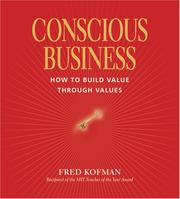 Conscious BusinessFred Kofman · 2002
 Punching InAlex Frankel · 2007
- 📕Commitment in OrganizationsHoward J. Klein, Thomas E. Becker · 2012
 Work motivation in the context of a globalizing economyUwe Kleinbeck, Henk Thierry · 2001
 Acceptance and Mindfulness at WorkSteven C. Hayes, Dermot Barnes-Holmes · 2007
 The Organization ManWilliam Hollingsworth Whyte · 1956
- 📕Organizational Resource ManagementJussi Kantola · 2015
 Psychological contracts in organizationsDenise M. Rousseau · 1995
Ranked by number of editions on Open Library, a rough measure of how lasting a book is.
🔗 Related topics
- Affective events theory Affective events theory (AET) is an industrial and organizational psychology model developed by organizational psychologists Howard M. Weiss (Georgia Institute…
- Organizational justice Greenberg (1987) introduced the concept of organizational justice with regard to how an employee judges the behavior of the organization and the employee's…
- Organizational identification Organizational identification (OI) is a term used in management studies and organizational psychology. The term refers to the propensity of a member of…
- Job attitude A job attitude is a set of evaluations of one's job that constitute one's feelings toward, beliefs about, and attachment to one's job. Overall job attitude…
- Job satisfaction Job satisfaction, employee satisfaction or work satisfaction is a measure of workers' contentment with their job, whether they like the job or individual…
- Leader–member exchange theory The leader–member exchange (LMX) theory is a relationship-based approach to leadership that focuses on the two-way (dyadic) relationship between leaders…
- Positive psychology in the workplace Positive psychology is defined as a method of building on what is good and what is already working instead of attempting to stimulate improvement by focusing…
- Employee engagement Employee engagement is a fundamental concept in the effort to understand and describe, both qualitatively and quantitatively, the nature of the relationship…