Live briefing
Everything about Operator theory
Mathematical study of linear operators
In mathematics, operator theory is the study of linear operators on function spaces, beginning with differential operators and integral operators. The operators may be presented abstractly by their characteristics, such as bounded linear operators or closed operators, and consideration may be given to nonlinear operators. The study, which depends heavily on the topology of function spaces, is a branch of functional analysis. Wikipedia →
🧭 Start here: a 6-step reading path
- Read the overview: Operator theoryA 5-minute orientation
- Skim a recent paper: Genetic algorithms: theory, genetic operators, solutions, and applicationsInfluential work since 2022
- Pick up a classic book: Operating System ConceptsThe most-reprinted book on the subject
- Read the landmark paper: A Theory of Fairness, Competition, and CooperationCited 8,497 times
- Go sideways: Polar decompositionA closely related topic
- Go sideways: Spectral theoremA closely related topic
📖 Definitions
Noun A branch of functional analysis, being the study of linear operators on function spaces.
🗂️ The subject at a glance
🏆 Landmark papers (most cited)
A Theory of Fairness, Competition, and Cooperation
Complex geometry and operator theory
Scattering theory for differential operators, I, operator theory
Heisenberg-picture operator perturbation theory
Operator theory on noncommutative varieties
Operator estimates in homogenization theory
Model theory of operator algebras II: model theory
Operator Scaling: Theory and Applications
🆕 Influential since 2022
Genetic algorithms: theory, genetic operators, solutions, and applications
Vehicular Applications of Koopman Operator Theory—A Survey
Quantum field theory for spin operator of the photon
Complete NNLO operator bases in Higgs effective field theory
Amplitude/operator basis in chiral perturbation theory
📚 Books worth reading
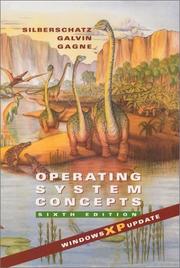 Operating System ConceptsAbraham Silberschatz · 1988
 An introduction to management scienceDavid Ray Anderson · 1976
 Introduction to probability modelsSheldon M. Ross · 1972
 Introduction to Coding TheoryJurgen Bierbrauer · 2016
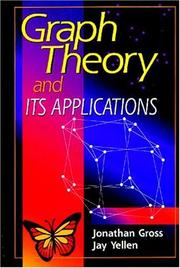 Graph theory and its applicationsJonathan L. Gross, Jay Yellen · 1999
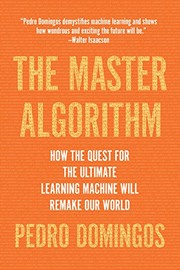 The Master AlgorithmPedro Domingos · 2015
 SchedulingMichael L. Pinedo · 2008
 Introduction to automata theory, languages, and computationJohn E. Hopcroft, Jeffrey D. Ullman · 1979
Ranked by number of editions on Open Library, a rough measure of how lasting a book is.
🔗 Related topics
- Polar decomposition In mathematics, the polar decomposition of a square real or complex matrix A is a factorization of the form A=UP, where U is a unitary matrix, and P is…
- Spectral theorem In linear algebra and functional analysis, a spectral theorem is a result about when a linear operator or matrix can be diagonalized (that is, represented…
- Compact operator on Hilbert space In the mathematical discipline of functional analysis, the concept of a compact operator on Hilbert space is an extension of the concept of a matrix acting…
- List of functional analysis topics This is a list of functional analysis topics. See also: Glossary of functional analysis. Bra–ket notation Definite bilinear form Direct integral Euclidean…
- Glossary of functional analysis This is a glossary for the terminology in a mathematical field of functional analysis. Throughout the article, unless stated otherwise, the base field…
- Affiliated operator In mathematics, affiliated operators were introduced by Murray and von Neumann in the theory of von Neumann algebras as a technique for using unbounded…
- Square root of a matrix In mathematics, the square root of a matrix extends the notion of square root from numbers to matrices. A matrix B is said to be a square root of A if…
- Normal matrix In mathematics, a complex square matrix A is normal if it commutes with its conjugate transpose A*: A normal⟺A∗A=AA∗. The concept of normal matrices can…