Everything about Operational transformation
Concurrency control method for collaborative software
Operational transformation (OT) is a technology for supporting a range of collaboration functionalities in advanced collaborative software systems. OT was originally invented for consistency maintenance and concurrency control in collaborative editing of plain text documents. Its capabilities have been extended and its applications expanded to include group undo, locking, conflict resolution, operation notification and compression, group-awareness, HTML, XML and tree-structured document editing, collaborative office productivity tools, application-sharing, and collaborative computer-aided media design tools. In 2009, OT was adopted as a core technique behind the collaboration features in then-Google Wave and Google Docs. Wikipedia →
🧭 Start here: a 6-step reading path
- Read the overview: Operational transformationA 5-minute orientation
- Skim a recent paper: Does digital transformation improve the operational efficiency of Chinese power enterprises?Influential work since 2022
- Pick up a classic book: Théorie des opérations linéairesThe most-reprinted book on the subject
- Read the landmark paper: Context-Based Operational Transformation in Distributed Collaborative Editing SystemsCited 77 times
- Go sideways: ACE (editor)A closely related topic
- Go sideways: Conflict-free replicated data typeA closely related topic
📖 Definitions
No dictionary entry for this exact phrase.
🏆 Landmark papers (most cited)
Context-Based Operational Transformation in Distributed Collaborative Editing Systems
Influence of Digital Transformation Capability on Operational Performance
Does digital transformation matter for operational risk exposure?
An Admissibility-Based Operational Transformation Framework for Collaborative Editing Systems
Formal design and verification of operational transformation algorithms for copies convergence
A New Operational Transformation Framework for Real-Time Group Editors
A Fast Operational Transformation Algorithm for Mobile and Asynchronous Collaboration
An Operational Transformation Algorithm and Performance Evaluation
🆕 Influential since 2022
Does digital transformation improve the operational efficiency of Chinese power enterprises?
Target priorities and transformation formalized indicators of operational systems for construction stakeholders
Effect of Digital Transformation on Company Operational Efficiency
Operational research and business intelligence as drivers for digital transformation
The impact of enterprise digital transformation on operational flexibility
📚 Books worth reading
 Théorie des opérations linéairesStefan Banach · 1932
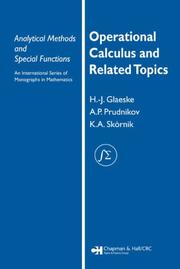 Operational calculus and related topicsA. P. Prudnikov · 2006
 The Radon TransformSigurdur Helgason · 2013
 Linear Integral EquationsRam P. Kanwal · 2013
 Modern operational mathematics in engineeringRuel Vance Churchill · 1944
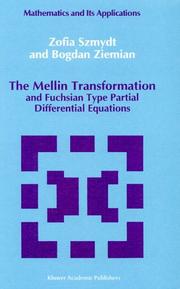 The Mellin transformation and Fuchsian type partial differential equationsZofia Szmydt · 1992
 Mathematical Logic and Its ApplicationsDimiter G. Skordev · 1988
 Integral transforms and operational calculusV. A. Ditkin · 1965
Ranked by number of editions on Open Library, a rough measure of how lasting a book is.
🔗 Related topics
- ACE (editor) ACE (ACE – a collaborative editor) is a platform-independent, collaborative real-time editor. It is a real-time cooperative editing system that allows…
- Conflict-free replicated data type In distributed computing, a conflict-free replicated data type (CRDT) is a data structure that is replicated across multiple computers in a network, with…
- Levenshtein distance In information theory, linguistics, and computer science, the Levenshtein distance is a string metric for measuring the difference between two sequences…
- Eventual consistency Eventual consistency is a consistency model used in distributed computing to achieve high availability. An eventually consistent system ensures that if…
- CoWord CoWord is a software add-on to Microsoft Word to enable multiple users to edit the same document over the Internet with MS Word. It is a part of the CoOffice…
- Approximate string matching In computer science, approximate string matching (often colloquially referred to as fuzzy string searching) is the technique of finding strings that match…
- Non-blocking algorithm In computer science, an algorithm is called non-blocking if failure or suspension of any thread cannot cause failure or suspension of another thread; for…
- Separation logic In computer science, separation logic is an extension of Hoare logic, a way of reasoning about programs. It was developed by John C. Reynolds, Peter O'Hearn…