Live briefing
Everything about Operational efficiency
Measurement of resource allocation
In a business context, operational efficiency is a measurement of resource allocation and can be defined as the ratio between an output gained from the business and an input to run a business operation. When improving operational efficiency, the output to input ratio improves. Wikipedia →
🧭 Start here: a 6-step reading path
- Read the overview: Operational efficiencyA 5-minute orientation
- Skim a recent paper: Data assets, information uses, and operational efficiencyInfluential work since 2022
- Pick up a classic book: Beyond airline disruptionsThe most-reprinted book on the subject
- Read the landmark paper: Internal Control and Operational EfficiencyCited 239 times
- Go sideways: Production (economics)A closely related topic
- Go sideways: BenchmarkingA closely related topic
📖 Definitions
No dictionary entry for this exact phrase.
🗂️ The subject at a glance
🏆 Landmark papers (most cited)
Internal Control and Operational Efficiency
Operational efficiency and effectiveness measurement
Operational efficiency of Asia–Pacific airports
ESG, operational efficiency and operational performance: evidence from Real Estate Investment Trusts
Operational efficiency of water damless intake
REIT Operational Efficiency and Shareholder Value
IS Strategic Planning for Operational Efficiency
Operational efficiency evaluation of restaurant firms
🆕 Influential since 2022
Data assets, information uses, and operational efficiency
Improving operational efficiency and effectiveness through blockchain technology
Machine Learning Prediction of Clinical Trial Operational Efficiency
AI-driven business analytics for operational efficiency
Unlocking operational efficiency: How AI human capital investment enhances data processing efficiency?
📚 Books worth reading
 Beyond airline disruptionsJasenka Rapajic · 2009
- 📕Analysis and Management of Productivity and Efficiency in Production Systems for Goods and ServicesFabio Sartori Piran, Daniel Pacheco Lacerda · 2020
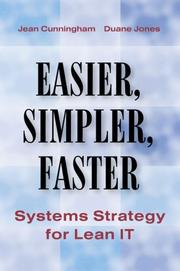 Easier, simpler, fasterJean E. Cunningham, Jean Cunningham · 2007
 Team of TeamsStanley A. McChrystal, Tantum Collins · 2015
 Stock market efficiency, insider dealing, and market abusePaul Barnes · 2008
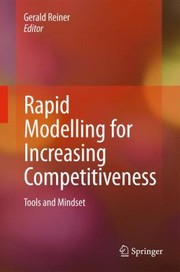 Rapid Modelling For Increasing CompetitivenessGerald Reiner · 2009
 Relentless improvementBill Trudell · 2012
- 📕System Analysis and Modelling in Air TransportMilan Janić · 2020
Ranked by number of editions on Open Library, a rough measure of how lasting a book is.
🔗 Related topics
- Production (economics) Production is the process of combining various inputs, both material (such as metal, wood, glass, or plastics) and immaterial (such as plans, or knowledge)…
- Benchmarking Benchmarking is the practice of comparing business processes and performance metrics to industry bests and best practices from other companies. Dimensions…
- Productivity Productivity is the efficiency of production of goods or services expressed by some measure. Measurements of productivity are often expressed as a ratio…
- Programming productivity Programming productivity (also called software productivity or development productivity) describes the degree of the ability of individual programmers…
- Efficiency Efficiency is the often measurable ability to avoid making mistakes or wasting materials, energy, efforts, money, and time while performing a task. In…
- Performance indicator A performance indicator or key performance indicator (KPI) is a type of performance measurement used to evaluate the success of an organization, activity…
- Workforce productivity Workforce productivity is the amount of goods and services that a group of workers produce in a given amount of time. It is one of several types of productivity…
- Revenue-cap regulation Revenue-cap regulation is a form of economic regulation in which the regulator of a public utility, typically a natural monopoly such as an electricity…