Everything about Ohm
SI derived unit of electrical resistance

The ohm is the unit of electrical resistance in the International System of Units (SI). It is named after German physicist Georg Ohm (1789–1854). Various empirically derived standard units for electrical resistance were developed in connection with early telegraphy practice, and the British Association for the Advancement of Science proposed a unit derived from existing units of mass, length and time, and of a convenient scale for practical work as early as 1861. Wikipedia →
🧭 Start here: a 6-step reading path
- Read the overview: OhmA 5-minute orientation
- Skim a recent paper: Double metals sites synergistically enhanced photocatalytic N2 fixation performance over Bi24O31Br10@Bi/Ti3C2Tx Ohm junctionsInfluential work since 2022
- Pick up a classic book: Principles of electric circuitsThe most-reprinted book on the subject
- Read the landmark paper: High-precision zircon U/Pb geochronology by ID-TIMS using new 10 13 ohm resistorsCited 104 times
- Go sideways: Siemens (unit)A closely related topic
- Go sideways: International System of UnitsA closely related topic
📖 Definitions
Noun In the International System of Units, the derived unit of electrical resistance; the electrical resistance of a device across which a potential difference of one volt causes a current of one ampere.
🗂️ The subject at a glance
🏆 Landmark papers (most cited)
High-precision zircon U/Pb geochronology by ID-TIMS using new 10 13 ohm resistors
Preparation and cold welding of silver nanowire based transparent electrodes with optical transmittances >90% and sheet resistances <10 ohm/sq
“Juice Monsters”: Sub-Ohm Vaping and Toxic Volatile Aldehyde Emissions
NIST comparison of the quantized Hall resistance and the realization of the SI OHM through the calculable capacitor
Use of 1012 ohm current amplifiers in Sr and Nd isotope analyses by TIMS for application to sub-nanogram samples
Titanium Silicide on Si:P With Precontact Amorphization Implantation Treatment: Contact Resistivity Approaching $1 \times 10^{-9}$ Ohm-cm2
Determination of the von Klitzing constant and the fine-structure constant through a comparison of the quantized Hall resistance and the ohm derived from the NIST calculable capacitor
Point‐ and Nonpoint‐Source Pesticide Contamination in the Zwester Ohm Catchment, Germany
🆕 Influential since 2022
Double metals sites synergistically enhanced photocatalytic N2 fixation performance over Bi24O31Br10@Bi/Ti3C2Tx Ohm junctions
Extreme undersaturation in the intercellular airspace of leaves: a failure of Gaastra or Ohm?
Doping-reinforced interfacial electric field for charge oriented accumulation in Ohm junction boosting photocatalytic N2 fixation
Interfacial tuning in FeP/ZnIn2S4 Ohm heterojunction: Enhanced photocatalytic hydrogen production via Zn-P charge bridging
OHM: GPU Based Occupancy Map Generation
📚 Books worth reading
 Principles of electric circuitsThomas L. Floyd · 1981
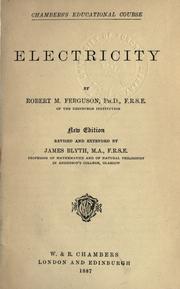 ElectricityRobert M. Ferguson · 1866
- 📕Der RotationsinduktorHeinrich Weber · 1882
 Collector's encyclopedia of Old Ivory ChinaAlma Hillman, David Goldschmitt · 1997
 Foundations of electonicsRussell L. Meade · 2006
- 📕Las leyes de Ohm, ensayo de historia científica y humanaCortés Plá · 1942
- 📕26201-11 Alternating Current TGNCCER · 2011
- 📕George Simon OhmFriedrich Mann · 2007
Ranked by number of editions on Open Library, a rough measure of how lasting a book is.
🔗 Related topics
- Siemens (unit) The siemens (symbol: S) is the unit of electric conductance, electric susceptance, and electric admittance in the International System of Units (SI). Conductanc…
- International System of Units The International System of Units, internationally known by the abbreviation SI (from its official French name, Système international d'unités), is the…
- Volt The volt (symbol: V), named after Alessandro Volta, is the unit of measurement of electric potential, electric potential difference (voltage), and electromotive…
- Ampere The ampere (symbol: A), often shortened to amp, is the unit of electric current in the International System of Units (SI). One ampere is equal to 1 coulomb…
- International System of Electrical and Magnetic Units The International System of Electrical and Magnetic Units is an obsolete system of units used for measuring electrical and magnetic quantities. It was…
- Conventional electrical unit A conventional electrical unit (or conventional unit where there is no risk of ambiguity) is a unit of measurement in the field of electricity which is…
- Centimetre–gram–second system of units The centimetre–gram–second system of units (CGS or cgs) is a variant of the metric system based on the centimetre as the unit of length, the gram as the…
- Coulomb The coulomb (symbol: C) is the unit of electric charge in the International System of Units (SI). It is defined to be equal to the electric charge delivered…