Live briefing
Everything about Object file
File containing relocatable format machine code
An object file is a file that contains machine code or bytecode, as well as other data and metadata, generated by a compiler or assembler from source code during the compilation or assembly process. The machine code that is generated is known as object code. Wikipedia →
🧭 Start here: a 6-step reading path
- Read the overview: Object fileA 5-minute orientation
- Skim a recent paper: LoomIO: Object-Level Coordination in Distributed File SystemsInfluential work since 2022
- Pick up a classic book: Learning PerlThe most-reprinted book on the subject
- Read the landmark paper: File and Object Replication in Data GridsCited 86 times
- Go sideways: Debugging informationA closely related topic
- Go sideways: Object Module Format (Intel)A closely related topic
📖 Definitions
Noun A file produced by a compiler containing executable code and program data; a file housing object code.
🗂️ The subject at a glance
🏆 Landmark papers (most cited)
File and Object Replication in Data Grids
What Is an Object File?
The persistence of object file representations
The XtreemFS architecture—a case for object‐based file systems in Grids
What’s in an object file? Evidence from priming studies
Feature binding in object-file representations of multiple moving items
Roles of object-file review and type priming in visual identification within and across eye fixations.
The Role of Conscious Perception in Attentional Capture and Object-File Updating
🆕 Influential since 2022
LoomIO: Object-Level Coordination in Distributed File Systems
The go no-go reviewing paradigm: A reliable method for measuring perceptual object-file updating
Improving Remote File Access in Distributed Object Stores by Decoupling Metadata and Data Paths Using NVMe-oF
A reliable paradigm for measuring object file updating
Architectural Tradeoffs in Migrating Enterprise File Workloads to Object Storage
📚 Books worth reading
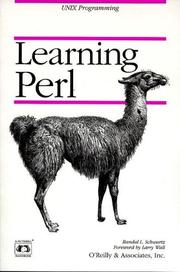 Learning PerlRandal L. Schwartz, Tom Phoenix · 1993
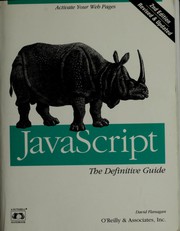 JavaScriptDavid Flanagan · 1996
 ActionScript 3.0 bibleRoger Braunstein, Mims H. Wright · 2007
 Java Examples in a NutshellDavid Flanagan · 1997
 Ole Automation Programmer's ReferenceMicrosoft Press · 1996
 Inside OLE 2Kraig Brockschmidt · 1993
 Windows programming made easyGlenn Maughan, Raphael Simon · 2000
 The Essence of COM and ActiveXDavid S. Platt · 1997
Ranked by number of editions on Open Library, a rough measure of how lasting a book is.
🔗 Related topics
- Debugging information Debugging information is information that describes a correspondence of elements in the source code, such as the names of variables and routines, to entities…
- Object Module Format (Intel) The Object Module Format (OMF) is an object file format used primarily for software intended to run on Intel 80x86 microprocessors. It was originally developed…
- Relocation (computing) In software development, relocation is the process of assigning load addresses for position-dependent code and data of a program and adjusting the code…
- Netwide Assembler The Netwide Assembler (NASM) is an assembler and disassembler for the Intel x86 architecture. It can be used to write 16-bit, 32-bit (IA-32) and 64-bit…
- Executable and Linkable Format In computing, the Executable and Linkable Format (ELF, formerly named Extensible Linking Format) is a common standard file format for executable files…
- Intel HEX Intel hexadecimal object file format, Intel hex format or Intellec Hex is a file format that conveys binary information in ASCII text form, making it possible…
- Arm Image Format In computer programming, the Arm Image Format (AIF) is an object file format used primarily for software intended to run on ARM microprocessors. It was…
- Linker (computing) A linker or link editor is a computer program that combines intermediate software build files such as object and library files into a single executable…