Everything about Number
Used to count, measure, and label

A number is a mathematical object used to count, measure, order and label. The most basic examples are the natural numbers: 1, 2, 3, 4, 5, and so forth. Individual numbers can be represented in spoken or written language with number words, or with dedicated symbols called numerals; for example, "eleven" is a number word and "11" is the corresponding numeral. As only a limited list of symbols can be memorized, a numeral system is used to represent any number in an organized way. The most common representation is the Hindu–Arabic numeral system, a decimal system which can display any non-negative integer using a combination of ten Arabic numeral symbols called digits. Numerals can be used for counting, for labelling, for ordering, and for codes. In common usage, however, a numeral is not clearly distinguished from the number that it represents. Wikipedia →
🧭 Start here: a 6-step reading path
- Read the overview: NumberA 5-minute orientation
- Skim a recent paper: Global estimates on the number of persons across the Alzheimer's disease continuumInfluential work since 2022
- Pick up a classic book: Essential MathsThe most-reprinted book on the subject
- Read the landmark paper: Detecting the number of clusters of individuals using the software structure : a simulation studyCited 19,915 times
- Go sideways: List of types of numbersA closely related topic
- Go sideways: Positional notationA closely related topic
📖 Definitions
Noun Quantity of countable things.
Noun An abstract entity used to describe quantity.
Noun A numeral: a symbol for a non-negative integer.
Noun An element of one of several sets: natural numbers, integers, rational numbers, real numbers, complex numbers, and sometimes extensions such as hypercomplex numbers, etc.
🏆 Landmark papers (most cited)
Detecting the number of clusters of individuals using the software structure : a simulation study
The magical number seven, plus or minus two: Some limits on our capacity for processing information.
Deciding on the Number of Classes in Latent Class Analysis and Growth Mixture Modeling: A Monte Carlo Simulation Study
The Scree Test For The Number Of Factors
A simulation study of the number of events per variable in logistic regression analysis
ESTIMATION OF AVERAGE HETEROZYGOSITY AND GENETIC DISTANCE FROM A SMALL NUMBER OF INDIVIDUALS
A Rationale and Test for the Number of Factors in Factor Analysis
The number of people with glaucoma worldwide in 2010 and 2020
🆕 Influential since 2022
Global estimates on the number of persons across the Alzheimer's disease continuum
Signatures of copy number alterations in human cancer
GENESPACE tracks regions of interest and gene copy number variation across multiple genomes
Targeting a gene regulatory element enhances rice grain yield by decoupling panicle number and size
The effective reproductive number of the Omicron variant of SARS-CoV-2 is several times relative to Delta
📚 Books worth reading
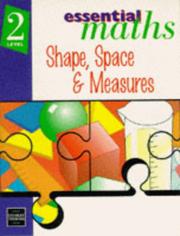 Essential MathsSean McArdle · 1996
 La JuiveF. Halévy · 1800
 Disquistiones arithmeticaeCarl Friedrich Gauss · 1801
 ZeroCharles Seife · 2000
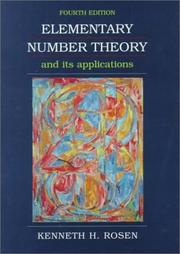 Elementary Number Theory and Its ApplicationsKenneth H. Rosen · 1922
 An introduction to the theory of numbersG. H. Hardy, Edward M. Wright · 1938
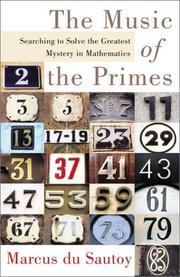 The music of the primesMarcus du Sautoy · 2003
 1 is oneTasha Tudor · 1956
Ranked by number of editions on Open Library, a rough measure of how lasting a book is.
🔗 Related topics
- List of types of numbers Numbers can be classified according to how they are represented or according to the properties that they have. Natural numbers (ℕ): The counting numbers…
- Positional notation Positional notation, also known as place-value notation, is the property of a numeral system that the value represented by each symbol in a written numeral…
- Radix In a positional numeral system, the radix (pl. radices) or base is the number of unique digits, including the digit zero, used to represent numbers. For…
- Nth root In mathematics, an nth root of a number x is the number r which, when n copies are multiplied together, yields x: rn=r×r×⋯×r⏟n factors=x. The positive…
- Real number In mathematics, a real number is a number that can be used to measure a continuous one-dimensional quantity such as a length, duration or temperature.…
- Arithmetic Arithmetic is an elementary branch of mathematics that deals with numerical operations like addition, subtraction, multiplication, and division. In a wider…
- 0 This article contains special characters. Without proper rendering support, you may see question marks, boxes, or other symbols. 0 (zero, /ˈziː.roʊ/) is…
- Decimal A decimal system (also called base-ten, denary or decenary) is a numeral system that uses ten as its radix (base). Decimal systems are the global standard…