Everything about Note-taking
Practice of recording information

Note-taking is the practice of recording information from different sources and platforms. By taking notes, the writer records the essence of the information, freeing their mind from having to recall everything. Notes are commonly drawn from a transient source, such as an oral discussion at a meeting, or a lecture, in which case the notes may be the only record of the event. Since the advent of writing and literacy, notes traditionally were almost always handwritten, but the introduction of notetaking software and websites has made digital notetaking possible and widespread. Note-taking is a foundational skill in personal knowledge management. Wikipedia →
🧭 Start here: a 6-step reading path
- Read the overview: Note-takingA 5-minute orientation
- Skim a recent paper: Translanguaging options for note-taking in EAP and EMIInfluential work since 2022
- Pick up a classic book: The Mind Map BookThe most-reprinted book on the subject
- Read the landmark paper: Listening and note taking.Cited 279 times
- Go sideways: Media multitaskingA closely related topic
- Go sideways: Study softwareA closely related topic
📖 Definitions
Noun Alternative form of notetaking.
Verb present participle and gerund of note-take
🏆 Landmark papers (most cited)
Listening and note taking.
Note-taking functions and techniques.
Note‐taking: A critical review
College students' theory of note-taking derived from their perceptions of note-taking.
Note taking versus note having.
Note-taking and passage style.
Taking Note(s)
Nodding and note-taking
🆕 Influential since 2022
Translanguaging options for note-taking in EAP and EMI
Note-taking in Academic Listening: A Translanguaging Perspective
Computer versus longhand note taking: Influence of revision
How does interpreting performance correlate with note-taking process, note-taking product and note-reading process? An eye-tracking and pen-recording study
Note‐taking by university students on paper or a computer: Strategies during initial note‐taking and revision
📚 Books worth reading
 The Mind Map BookTony Buzan, Barry Buzan · 1993
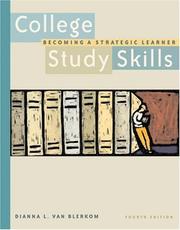 College Study SkillsDianna L. Van Blerkom · 1993
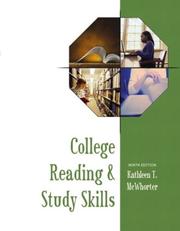 College reading and study skillsKathleen T. McWhorter · 1980
 How to Take Smart NotesSönke Ahrens · 2017
 Reading Strategies for College and BeyondDeborah J. Kellner · 2012
 Keys to reading and study skillsHarriet Krantz, Joan Kimmelman · 1981
- 📕Note-Taking for Consecutive InterpretingAndrew Gillies · 2014
- 📕Student's guide to efficient studyLuella Cole · 1931
Ranked by number of editions on Open Library, a rough measure of how lasting a book is.
🔗 Related topics
- Media multitasking Media multitasking is the concurrent use of multiple digital media streams. Media multitasking has been associated with depressive symptoms and social…
- Study software Study software refers to computer programs designed to enhance the effectiveness of learning by improving the way students engage with, process, and retain…
- Cornell Notes The Cornell Notes system (also Cornell note-taking system, Cornell method, Cornell way or just Cornell notes) is a note-taking system devised in the 1950s…
- Mind map A mind map is a diagram used to visually organize information into a hierarchy, showing relationships among pieces of the whole. It is often based on a…
- Cognitivism (psychology) In psychology, cognitivism is a theoretical framework for understanding the mind that gained credence in the 1950s. The movement was a response to behaviorism…
- Study skills Study skills or study strategies are approaches applied to learning. Study skills are an array of skills which tackle the process of organizing and taking…
- Active learning Active learning is "a method of learning in which students are actively or experientially involved in the learning process and where there are different…
- Bloom's taxonomy Bloom's taxonomy is a framework for categorizing educational goals, developed by a committee of educators chaired by Benjamin Bloom in 1956. It was first…