Everything about Neural coding
Method by which information is represented in the brain
Neural coding refers to the relationship between a stimulus and its respective neuronal responses, and the signalling relationships among networks of neurons in an ensemble. Action potentials, which act as the primary carrier of information in biological neural networks, are generally uniform regardless of the type of stimulus or the specific type of neuron. The simplicity of action potentials as a methodology of encoding information factored with the indiscriminate process of summation is seen as discontiguous with the specification capacity that neurons demonstrate at the presynaptic terminal, as well as the broad ability for complex neuronal processing and regional specialisation for which the brain-wide integration of such is seen as fundamental to complex derivations; such as intelligence, consciousness, complex social interaction, reasoning and motivation. As such, theoretical frameworks that describe encoding mechanisms of action potential sequences in relationship to observed patterns are seen as fundamental to neuroscientific understanding. Wikipedia →
🧭 Start here: a 6-step reading path
- Read the overview: Neural codingA 5-minute orientation
- Skim a recent paper: A programmable diffractive deep neural network based on a digital-coding metasurface arrayInfluential work since 2022
- Pick up a classic book: Ground-state coding in partially connected neural networksThe most-reprinted book on the subject
- Read the landmark paper: Instant neural graphics primitives with a multiresolution hash encodingCited 4,327 times
- Go sideways: Neural decodingA closely related topic
- Go sideways: Biological neuron modelA closely related topic
📖 Definitions
No dictionary entry for this exact phrase.
🗂️ The subject at a glance
🏆 Landmark papers (most cited)
Instant neural graphics primitives with a multiresolution hash encoding
Deep learning with convolutional neural networks for EEG decoding and visualization
Information theory and neural coding
Neural Elements for Predictive Coding
Neural Ensemble Coding of Satiety States
Neural associative memories and sparse coding
Neural coding strategies in auditory cortex
Information-Theoretic Analysis of Neural Coding
🆕 Influential since 2022
A programmable diffractive deep neural network based on a digital-coding metasurface array
The neural coding framework for learning generative models
A Hybrid Neural Coding Approach for Pattern Recognition With Spiking Neural Networks
Neural synchrony in cortical networks: mechanisms and implications for neural information processing and coding
Brain-computer interface paradigms and neural coding
📚 Books worth reading
- 📕Ground-state coding in partially connected neural networksYoram Baram · 1989
 Cyber-EugenicsBernard Amador · 2008
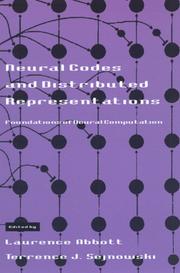 Neural codes and distributed representationsL. F. Abbott, Terrence J. Sejnowski · 1999
 Independent Component Analysis and Blind Signal SeparationJose C. Principe, Simon Haykin · 2006
- 📕Radar Waveform Design Based on Optimization TheoryGuolong Cui, Antonio De Maio · 2020
- 📕Learning and coding in biological neural networksIla Rani Fiete · 2003
- 📕Encoding techniques for complex information structures in connectionist systemsJohn A. Barnden · 1990
 Deep belief nets in C++ and CUDA CTimothy Masters · 2015
Ranked by number of editions on Open Library, a rough measure of how lasting a book is.
🔗 Related topics
- Neural decoding Neural decoding is a neuroscience field concerned with the hypothetical reconstruction of sensory and other stimuli from information that has already been…
- Biological neuron model Biological neuron models, also known as spiking neuron models, are mathematical descriptions of the conduction of electrical signals in neurons. Neurons…
- Sensory neuroscience Sensory neuroscience is a subfield of neuroscience which explores the anatomy and physiology of neurons that are part of sensory systems such as vision…
- Neural oscillation Neural oscillations, or brainwaves, are rhythmic or repetitive patterns of neural activity in the central nervous system. Neural tissue can generate oscillatory…
- Spike response model The spike response model (SRM) is a spiking neuron model in which spikes are generated by either a deterministic or a stochastic threshold process. In…
- Efficient coding hypothesis The efficient coding hypothesis was proposed by Horace Barlow in 1961 as a theoretical model of sensory neuroscience in the brain. Within the brain, neurons…
- Neuronal ensemble A neuronal ensemble is a population of nervous system cells (or cultured neurons) involved in a particular neural computation. The concept of neuronal…
- Spiking neural network Spiking neural networks (SNNs) are artificial neural networks (ANN) that mimic natural neural networks. These models leverage timing of discrete spikes…