Everything about Neural binding
Neurological ramifications of and for the Binding Problem in the study of consciousness

Neural binding is the neuroscientific aspect of what is commonly known as the binding problem: the interdisciplinary difficulty of creating a comprehensive and verifiable model for the unity of consciousness. "Binding" refers to the integration of highly diverse neural information in the forming of one's cohesive experience. The neural binding hypothesis states that neural signals are paired through synchronized oscillations of neuronal activity that combine and recombine to allow for a wide variety of responses to context-dependent stimuli. These dynamic neural networks are thought to account for the flexibility and nuanced response of the brain to various situations. The coupling of these networks is transient, on the order of milliseconds, and allows for rapid activity. Wikipedia →
🧭 Start here: a 6-step reading path
- Read the overview: Neural bindingA 5-minute orientation
- Skim a recent paper: GraphscoreDTA: optimized graph neural network for protein–ligand binding affinity predictionInfluential work since 2022
- Pick up a classic book: G protein methods and protocolsThe most-reprinted book on the subject
- Read the landmark paper: Temporal binding and the neural correlates of sensory awarenessCited 1,078 times
- Go sideways: Binding problemA closely related topic
- Go sideways: Neural oscillationA closely related topic
📖 Definitions
No dictionary entry for this exact phrase.
🗂️ The subject at a glance
🏆 Landmark papers (most cited)
Temporal binding and the neural correlates of sensory awareness
Dynamic binding in a neural network for shape recognition.
Convolutional neural network architectures for predicting DNA–protein binding
Crossmodal binding through neural coherence: implications for multisensory processing
Neural Architecture for Feature Binding in Visual Working Memory
Neural correlates of cross-modal binding
Recurrent Neural Network for Predicting Transcription Factor Binding Sites
DISC1-binding proteins in neural development, signalling and schizophrenia
🆕 Influential since 2022
GraphscoreDTA: optimized graph neural network for protein–ligand binding affinity prediction
Enhancing Protein–Ligand Binding Affinity Predictions Using Neural Network Potentials
Domain-adaptive neural networks improve cross-species prediction of transcription factor binding
CapsNet-MHC predicts peptide-MHC class I binding based on capsule neural networks
Binding affinity predictions with hybrid quantum-classical convolutional neural networks
📚 Books worth reading
 G protein methods and protocolsGlen B. Baker, Alan A. Boulton · 1997
 Cell surface receptorsICN-UCLA Conference on Cell Surface Receptors Squaw Valley Calif. 1975. · 1976
 Neurotransmitter receptor bindingS. J. Enna, Michael J. Kuhar · 1985
 Small GTPases and Their Regulators Pt. CAlan Hall, John N. Abelson · 1995
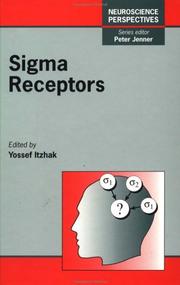 Sigma receptorsPeter Jenner · 1994
 New comprehensive biochemistryAlbert Neuberger · 1991
Ranked by number of editions on Open Library, a rough measure of how lasting a book is.
🔗 Related topics
- Binding problem The unity of consciousness and (cognitive) binding problem is the problem of how objects, background, and abstract or emotional features are combined into…
- Neural oscillation Neural oscillations, or brainwaves, are rhythmic or repetitive patterns of neural activity in the central nervous system. Neural tissue can generate oscillatory…
- Gamma wave A gamma wave or gamma rhythm is a pattern of neural oscillation in humans with a frequency between 30 and 100 Hz, the 40 Hz point being of particular interest…
- Quantum mind The quantum mind or quantum consciousness is a group of hypotheses proposing that local physical laws and interactions from classical mechanics or connections…
- Orchestrated objective reduction Orchestrated objective reduction (Orch OR) is a controversial theory postulating that consciousness originates at the quantum level inside neurons (rather…
- Electromagnetic theories of consciousness Electromagnetic theories of consciousness propose that consciousness can be understood as an electromagnetic phenomenon. Theorists differ in how they relate…
- Andreas K. Engel Andreas Karl Engel (born 1961) is a German neuroscientist. He serves as the director of the Department of Neurophysiology and Pathophysiology at the University…
- Posterior cortical hot zone The term posterior cortical hot zone was coined by Christof Koch and colleagues to describe the part of the neocortex closely associated with the minimal…