Everything about Network simulation
Simulating computer networks
In computer network research, network simulation is a technique whereby a software program replicates the behavior of a real network. This is achieved by calculating the interactions between the different network entities such as routers, switches, nodes, access points, links, etc. Most simulators use discrete event simulation in which the modeling of systems in which state variables change at discrete points in time. The behavior of the network and the various applications and services it supports can then be observed in a test lab; various attributes of the environment can also be modified in a controlled manner to assess how the network/protocols would behave under different conditions. Wikipedia →
🧭 Start here: a 6-step reading path
- Read the overview: Network simulationA 5-minute orientation
- Skim a recent paper: Graph neural network-accelerated Lagrangian fluid simulationInfluential work since 2022
- Pick up a classic book: Job scheduling strategies for parallel processingThe most-reprinted book on the subject
- Read the landmark paper: Advances in network simulationCited 502 times
- Go sideways: Network emulationA closely related topic
- Go sideways: Simulation softwareA closely related topic
📖 Definitions
No dictionary entry for this exact phrase.
🗂️ The subject at a glance
🏆 Landmark papers (most cited)
Advances in network simulation
GPU accelerated biochemical network simulation
Supply network modelling and simulation methodology
Network modelling and simulation tools
Large-scale network simulation techniques
Mobile wireless network system simulation
Towards realism in network simulation
Drainage network simulation
🆕 Influential since 2022
📚 Books worth reading
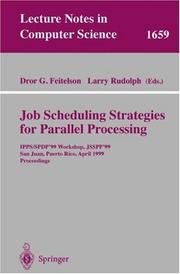 Job scheduling strategies for parallel processingJSSPP'99 (1999 San Juan, P.R.), IPPS/SPDP '98 Workshop (1998 Orlando, Fla.) · 1995
 Neural Information ProcessingTingwen Huang · 2012
 Parallel Computing TechnologiesVictor Malyshkin · 2003
 Model And Data EngineeringLadjel Bellatreche · 2011
 Introduction to Neural and Cognitive ModelingDaniel S. Levine · 1991
 Computational Science and Its Applications - ICCSA 2014Beniamino Murgante, Sanjay Misra · 2014
 Information Computing and ApplicationsBaoxiang Liu · 2010
 Computational neuroscienceJianfeng Feng · 2003
Ranked by number of editions on Open Library, a rough measure of how lasting a book is.
🔗 Related topics
- Network emulation Network emulation is a technique for testing the performance of real applications over a virtual network. This is different from network simulation where…
- Simulation software Simulation software is software that models a real phenomenon with a set of mathematical formulas. It allows a user to see the results of an action without…
- Traffic generation model A traffic generation model is a stochastic model of the traffic flows or data sources in a communication network, for example a cellular network or a computer…
- Network throughput Network throughput (or just throughput, when in context) refers to the rate of message delivery over a communication channel in a communication network…
- Opportunistic mobile social network Opportunistic mobile social networks are a form of mobile ad hoc networks that exploit the human social characteristics, such as similarities, daily routines…
- Wireless ad hoc network A wireless ad hoc network (WANET) or mobile ad hoc network (MANET) is a decentralized type of wireless network. Ad hoc networks do not rely on pre-existing…
- Ns (simulator) ns (from network simulator) is a name for a series of discrete event network simulators, specifically ns-1, ns-2, and ns-3. All are discrete-event computer…
- Mobility model Mobility models characterize the movements of mobile users with respect to their location, velocity and direction over a period of time. These models play…