Everything about Network Access Protection
Microsoft computer security technology
Network Access Protection (NAP) is a Microsoft technology for controlling network access of a computer, based on its health. It was first included in Windows Vista and Windows Server 2008 and backported to Windows XP Service Pack 3. With NAP, system administrators of an organization can define policies for system health requirements. Examples of system health requirements are whether the computer has the most recent operating system updates installed, whether the computer has the latest version of the anti-virus software signature, or whether the computer has a host-based firewall installed and enabled. Computers with a NAP client will have their health status evaluated upon establishing a network connection. NAP can restrict or deny network access to the computers that are not in compliance with the defined health requirements. Wikipedia →
🧭 Start here: a 6-step reading path
- Read the overview: Network Access ProtectionA 5-minute orientation
- Skim a recent paper: Lightweight Secure Session Key Protection, Mutual Authentication, and Access Control (LSSMAC) for WBAN-Assisted IoT NetworkInfluential work since 2022
- Pick up a classic book: Network Security AssessmentThe most-reprinted book on the subject
- Read the landmark paper: Integration of fiber and FSO network with fault-protection for optical access networkCited 47 times
- Go sideways: Network access controlA closely related topic
- Go sideways: Network Admission ControlA closely related topic
📖 Definitions
No dictionary entry for this exact phrase.
🗂️ The subject at a glance
🏆 Landmark papers (most cited)
Integration of fiber and FSO network with fault-protection for optical access network
Ring-Based WDM Access Network Providing Both Rayleigh Backscattering Noise Mitigation and Fiber-Fault Protection
Integration of FSO Traffic in Ring-Topology Bidirectional Fiber Access Network With Fault Protection
Protection based on backup radios and backup fibers for survivable Fiber-Wireless (FiWi) access network
Protection Systems for Optical Access Networks
Internet network location privacy protection with multi-access edge computing
Demonstration of QoS-aware wireless protection scheme for video service in fiber-wireless access network
Wi-Fi protected access for secure power network protection scheme
🆕 Influential since 2022
Lightweight Secure Session Key Protection, Mutual Authentication, and Access Control (LSSMAC) for WBAN-Assisted IoT Network
A Survivable and Flexible WDM Access Network by Alternate FSO- and Fiber-Paths for Fault Protection
Construction of network access Layer security protection System based on zero trust architecture
Cloud Safe: A Survey of Encryption, Access Control, and Network Protection Strategies
CHOICE OF REMOTE ACCESS TECHNOLOGY FOR EFFECTIVE ORGANIZATION OF PROTECTION OF NETWORK CONNECTIONS
📚 Books worth reading
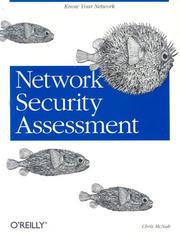 Network Security AssessmentChris McNab · 2004
 Security in Computing and CommunicationsSabu M. Thampi, Sanjay Madria · 2013
 Information Systems Security and PrivacyOlivier Camp, Edgar Weippl · 2015
- 📕Information security policy development for complianceBarry L. Williams · 2013
- 📕Critical infrastructure protectionJack L. Brock · 1999
 Research in Attacks, Intrusions and DefensesAngelos Stavrou, Herbert Bos · 2013
 Critical Information Infrastructures SecurityJavier Lopez · 2007
- 📕Handbook of Research on Information and Cyber Security in the Fourth Industrial RevolutionZiska Fields · 2018
Ranked by number of editions on Open Library, a rough measure of how lasting a book is.
🔗 Related topics
- Network access control Network access control (NAC) is an approach to computer security that attempts to unify endpoint security technology (such as antivirus, host intrusion…
- Network Admission Control Network Admission Control (NAC) refers to Cisco's version of network access control, which restricts access to the network based on identity or security…
- DirectAccess DirectAccess, also known as Unified Remote Access, is a VPN technology that provides intranet connectivity to client computers when they are connected…
- Security and safety features new to Windows Vista Windows Vista introduces numerous new security and safety features intended to deliver greater privacy, security, and system integrity than earlier releases…
- Remote Installation Services RIS, Remote Installation Services is a Microsoft-supplied server that allows PXE BIOS-enabled computers to remotely execute boot environment variables…
- Cisco NAC Appliance Cisco NAC Appliance, formerly Cisco Clean Access (CCA), was a network admission control (NAC) system developed by Cisco Systems designed to produce a secure…
- Internet Connection Sharing Internet Connection Sharing (ICS) is a Windows service that enables one Internet-connected computer to share its Internet connection with other computers…
- Supplicant (computer) In computer networking, a supplicant is an entity at one end of a point-to-point LAN segment that seeks to be authenticated by an authenticator attached…