Live briefing
Everything about Neighbor joining
Bottom-up clustering method for creating phylogenetic trees
In bioinformatics, neighbor joining is a bottom-up (agglomerative) clustering method for the creation of phylogenetic trees, created by Naruya Saitou and Masatoshi Nei in 1987. Usually based on DNA or protein sequence data, the algorithm requires knowledge of the distance between each pair of taxa to create the phylogenetic tree. Wikipedia →
🧭 Start here: a 6-step reading path
- Read the overview: Neighbor joiningA 5-minute orientation
- Skim a recent paper: Phylogenies in yeast species descriptions: In defense of neighbor‐joiningInfluential work since 2022
- Pick up a classic book: American FilmThe most-reprinted book on the subject
- Read the landmark paper: The neighbor-joining method: a new method for reconstructing phylogenetic trees.Cited 6,545 times
- Go sideways: Minimum evolutionA closely related topic
- Go sideways: Single-linkage clusteringA closely related topic
📖 Definitions
No dictionary entry for this exact phrase.
🏆 Landmark papers (most cited)
The neighbor-joining method: a new method for reconstructing phylogenetic trees.
Prospects for inferring very large phylogenies by using the neighbor-joining method
PARSIMONY JACKKNIFING OUTPERFORMS NEIGHBOR‐JOINING
Weighted Neighbor Joining: A Likelihood-Based Approach to Distance-Based Phylogeny Reconstruction
Neighbor-Joining Revealed
Multiple UPGMA and Neighbor-joining Trees and the Performance of Some Computer Packages
Clearcut: a fast implementation of relaxed neighbor joining
The Performance of Neighbor-Joining Methods of Phylogenetic Reconstruction
🆕 Influential since 2022
Phylogenies in yeast species descriptions: In defense of neighbor‐joining
Calculating functional diversity metrics using neighbor‐joining trees
The MultiFurcating Neighbor-Joining Algorithm for Reconstructing Polytomic Phylogenetic Trees
Scaling neighbor joining to one million taxa with dynamic and heuristic neighbor joining
Sparse Neighbor Joining: rapid phylogenetic inference using a sparse distance matrix
📚 Books worth reading
 American FilmAmerican Film Institute · 1975
 The Conspirators HierarchyJohn Coleman · 1992
 Reluctant rebelsKenneth W. Noe · 2010
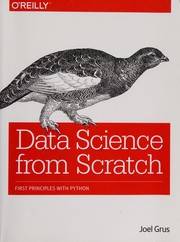 Data science from scratchJoel Grus · 2015
 The Good News ClubKatherine Stewart · 2011
 Collections, a Harcourt reading/language arts programRoger C. Farr · 2001
- 📕Remembering GeorgetownMissy Loewe · 2009
 Collections, a Harcourt reading/language arts programRoger C. Farr · 2000
Ranked by number of editions on Open Library, a rough measure of how lasting a book is.
🔗 Related topics
- Minimum evolution Minimum Evolution (ME) is a phylogenetic tree building method. It uses a pairwise distance matrix, calculated from a multiple sequence alignment, to generate…
- Single-linkage clustering In statistics, single-linkage clustering is one of several methods of hierarchical clustering. It is based on grouping clusters in bottom-up fashion (agglomerat…
- Complete-linkage clustering Complete-linkage clustering is one of several methods of agglomerative hierarchical clustering. At the beginning of the process, each element is in a cluster…
- Distance matrix In mathematics, computer science and especially graph theory, a distance matrix is a square matrix (two-dimensional array) containing the distances, taken…
- UPGMA UPGMA (unweighted pair group method with arithmetic mean) is a simple agglomerative (bottom-up) hierarchical clustering method. It also has a weighted…
- WPGMA WPGMA (Weighted Pair Group Method with Arithmetic Mean) is a simple agglomerative (bottom-up) hierarchical clustering method, generally attributed to Sokal…
- Phylogenetic invariants Phylogenetic invariants are polynomial relationships between the frequencies of various site patterns in an idealized DNA multiple sequence alignment.…
- Computational phylogenetics Computational phylogenetics, phylogeny inference, or phylogenetic inference focuses on computational and optimization algorithms, heuristics, and approaches…