Live briefing

Everything about Natural pacemaker
Network of cells that facilitate rhythmic heart contraction
The natural pacemaker is the heart's natural rhythm generator. It employs pacemaker cells that produce electrical impulses, known as cardiac action potentials, which control the rate of contraction of the cardiac muscle, that is, the heart rate. In most humans, these cells are concentrated in the sinoatrial (SA) node, the primary pacemaker, which regulates the heart’s sinus rhythm. Wikipedia →
🧭 Start here: a 6-step reading path
- Read the overview: Natural pacemakerA 5-minute orientation
- Skim a recent paper: Natural History of Nonsurgical Complete Atrioventricular Block in Children and Predictors of Pacemaker ImplantationInfluential work since 2022
- Pick up a classic book: A Christmas CarolThe most-reprinted book on the subject
- Read the landmark paper: Direct Powering a Real Cardiac Pacemaker by Natural Energy of a HeartbeatCited 199 times
- Go sideways: Cardiac physiologyA closely related topic
- Go sideways: Cardiac action potentialA closely related topic
📖 Definitions
No dictionary entry for this exact phrase.
🗂️ The subject at a glance
🏆 Landmark papers (most cited)
Direct Powering a Real Cardiac Pacemaker by Natural Energy of a Heartbeat
Symptomatic Bradyarrhythmias in the Adult: Natural History Following Ventricular Pacemaker Implantation
The natural history of pacemaker wires
Natural history of high-grade atrioventricular block following permanent pacemaker implantation
Natural History of Sinus Node Dysfunction After Permanent Pacemaker Implantation
Modelling the natural pacemaker of the heart as a pulse-frequency modulator
Corrigendum to: Backup natural pacemaker found in the heart
Backup natural pacemaker found in the heart
🆕 Influential since 2022
📚 Books worth reading
 A Christmas CarolCharles Dickens · 1843
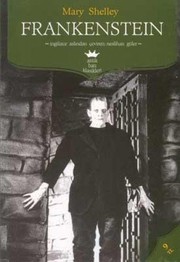 Frankenstein; or, The Modern PrometheusMary Shelley · 1818
 The Call of the WildJack London · 1903
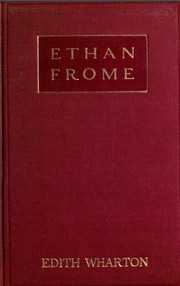 Ethan FromeEdith Wharton · 1910
 Victory in ChristSteven A. Cramer · 2006
- 📕Passage to General Science (The Pacemaker Passage Series) · 1998
- 📕United States Geography, Critical Thinking Workbook (The Pacemaker Curriculum Series) · 1998
 Inventing modern AmericaBrown, David E · 2002
Ranked by number of editions on Open Library, a rough measure of how lasting a book is.
🔗 Related topics
- Cardiac physiology Cardiac physiology or heart function is the study of healthy, unimpaired function of the heart: involving blood flow; myocardium structure; the electrical…
- Cardiac action potential Unlike the action potential in skeletal muscle cells, the cardiac action potential is not initiated by nervous activity. Instead, it arises from a group…
- Cardiac conduction system The cardiac conduction system (CCS, also called the electrical conduction system of the heart) transmits the signals generated by the sinoatrial node –…
- Sinoatrial node The sinoatrial node (also known as the sinuatrial node, SA node, sinus node or Keith–Flack node) is an oval shaped region of special cardiac muscle in…
- Cardiac muscle Cardiac muscle (also called heart muscle or myocardium) is one of three types of vertebrate muscle tissues, the others being skeletal muscle and smooth…
- Systole Systole (/ˈsɪstəli/ SIST-ə-lee) is the part of the cardiac cycle during which some chambers of the heart contract after refilling with blood. Its contrasting…
- Ventricular escape beat In cardiology, a ventricular escape beat is a self-generated electrical discharge initiated by, and causing contraction of the ventricles of the heart;…
- Bradycardia Bradycardia (from Ancient Greek βραδύς (bradús) 'slow' and καρδία (kardía) 'heart'), also called bradyarrhythmia, is a resting heart rate of fewer than…