Live briefing
Everything about Musical note
Representation of isolatable musical sound
In music, notes are distinct and isolatable sounds that act as the most basic building blocks for nearly all of music. This discretization facilitates performance, comprehension, and analysis. Notes may be visually communicated by writing them in musical notation. Wikipedia →
🧭 Start here: a 6-step reading path
- Read the overview: Musical noteA 5-minute orientation
- Skim a recent paper: Note-Level Singing Melody Transcription for Time-Aligned Musical Score GenerationInfluential work since 2022
- Pick up a classic book: The Roman BreviaryThe most-reprinted book on the subject
- Read the landmark paper: A Fruity Note: Crossmodal associations between odors and musical notesCited 110 times
- Go sideways: Scientific pitch notationA closely related topic
- Go sideways: Accidental (music)A closely related topic
📖 Definitions
No dictionary entry for this exact phrase.
🗂️ The subject at a glance
🏆 Landmark papers (most cited)
A Fruity Note: Crossmodal associations between odors and musical notes
Note‐by‐note analysis of the influence of expressive intentions and musical structure in violin performance*
Schubert's Promissory Note: An Exercise in Musical Hermeneutics
Universality in the tail of musical note rank distribution
A musical note on the efficiency wage hypothesis
Independent component analysis for automatic note extraction from musical trills
Musical Stem Completion: Humming That Note
Schubert's Promissory Note: An Exercise in Musical Hermeneutics
🆕 Influential since 2022
Note-Level Singing Melody Transcription for Time-Aligned Musical Score Generation
Musical note recognition based on the upper adjacent harmonics without the presence of the fundamental frequency
Musical Note Feature Recognition Based on Long Short-Term Memory
Learning and teaching of fluent musical note recognition: the visual perceptual perspective
Musical Note Position and Duration Recognition Model in Optical Music Recognition Using Convolutional Neural Network
📚 Books worth reading
 The Roman BreviaryCatholic Church, John Patrick Crichton-Stuart 3rd Marquess of Bute · 1200
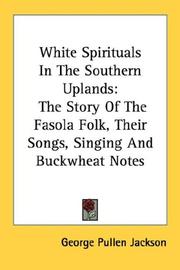 White spirituals in the southern uplandsGeorge Pullen Jackson · 1933
 Harmonic companion, and guide to social worshipAndrew Law · 1807
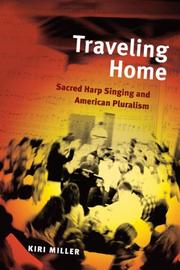 Traveling homeKiri Miller · 2007
- 📕The Musical millionPaul M. Hall · 1970
 Judge Jackson and the Colored Sacred HarpJoe Dan Boyd · 2002
 C-NoteElina Furman · 2000
 Sound the TrumpetJonathan Harnum · 2006
Ranked by number of editions on Open Library, a rough measure of how lasting a book is.
🔗 Related topics
- Scientific pitch notation Scientific pitch notation (SPN), also known as American standard pitch notation (ASPN) and international pitch notation (IPN), is a method of specifying…
- Accidental (music) Musical scores are temporarily disabled due to a security issue. See Help:Score. In musical notation, an accidental is a symbol that indicates an alteration…
- Enharmonic equivalence In music, two written notes have enharmonic equivalence if they produce the same pitch but are notated differently. Similarly, written intervals, chords…
- Letter notation In music, letter notation is a system of representing a set of pitches, for example, the notes of a scale, by letters. For the complete Western diatonic…
- Sharp (music) In music, sharp – eqv. dièse (from French) or diesis (Greek: δίεσις) – means higher in pitch. The sharp symbol, ♯, indicates that the note to which the…
- Flat (music) In music, flat means lower in pitch. The flat symbol, ♭, indicates that the note to which it is applied is played one chromatic semitone lower. The opposite…
- Key (music) In Western tonal music, a key represents the most common pitches and the center of tonal stability in a song or other composition. A key has two components:…
- Major scale A major scale is a sequence of musical notes containing a major triad on the tonic. Most commonly, the term "major scale" refers to the natural major scale…