Live briefing
Everything about Multiway data analysis
Method of analyzing large data sets
Multiway data analysis is a method of analyzing large data sets by representing a collection of observations as a multiway array,. The proper choice of data organization into (C+1)-way array, and analysis techniques can reveal patterns in the underlying data undetected by other methods. Wikipedia →
🧭 Start here: a 6-step reading path
- Read the overview: Multiway data analysisA 5-minute orientation
- Skim a recent paper: A dynamic hypergraph regularized non-negative tucker decomposition framework for multiway data analysisInfluential work since 2022
- Pick up a classic book: Data structures and algorithm analysis in CThe most-reprinted book on the subject
- Read the landmark paper: Unsupervised Multiway Data Analysis: A Literature SurveyCited 336 times
- Go sideways: Multilinear principal component analysisA closely related topic
- Go sideways: Higher-order singular value decompositionA closely related topic
📖 Definitions
No dictionary entry for this exact phrase.
🗂️ The subject at a glance
🏆 Landmark papers (most cited)
Unsupervised Multiway Data Analysis: A Literature Survey
Multiway canonical correlation analysis of brain data
Kernelization of Tensor-Based Models for Multiway Data Analysis: Processing of Multidimensional Structured Data
Bayesian Nonparametric Models for Multiway Data Analysis
Nonconvulsive Epileptic Seizure Detection in Scalp EEG Using Multiway Data Analysis
An introduction to tensor products with applications to multiway data analysis
NeuralCP: Bayesian Multiway Data Analysis with Neural Tensor Decomposition
Multiway analysis of preconcentrator-sampled surface acoustic wave chemical sensor array data
🆕 Influential since 2022
A dynamic hypergraph regularized non-negative tucker decomposition framework for multiway data analysis
Characterizing human postprandial metabolic response using multiway data analysis
Exploring dynamic metabolomics data with multiway data analysis: a simulation study
Hypergraph regularized nonnegative triple decomposition for multiway data analysis
Sparse multiway canonical correlation analysis for multimodal stroke recovery data
📚 Books worth reading
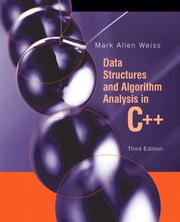 Data structures and algorithm analysis in CMark Allen Weiss · 1993
 Introduction to Computing Using PythonLjubomir Perkovic · 2011
 Data structures & algorithm analysis in JavaMark Allen Weiss · 1999
 Computational Thinking for the Modern Problem SolverKenny A. Hunt, David D. Riley · 2014
 Applied Multiway Data AnalysisPieter M. Kroonenberg · 2007
 Nonnegative matrix and tensor factorizationsAndrzej Cichocki · 2009
 Fundamentals of data structures in CEllis Horowitz · 1993
 Data structures and algorithms in JavaAdam Drozdek · 2001
Ranked by number of editions on Open Library, a rough measure of how lasting a book is.
🔗 Related topics
- Multilinear principal component analysis Multilinear principal component analysis (MPCA) is a multilinear extension of principal component analysis (PCA) that is used to analyze M-way arrays,…
- Higher-order singular value decomposition In multilinear algebra, the higher-order singular value decomposition (HOSVD) is a misnomer. There does not exist a single tensor decomposition that retains…
- Mode-k flattening In multilinear algebra, mode-m flattening, also known as matrixizing, matricizing is an operation that reshapes a multi-way array A {\displaystyle {\mathcal…
- Tensor (machine learning) In machine learning, the term tensor informally refers to two different concepts: (i) a way of organizing data and (ii) a multilinear (tensor) transformation…
- Tensor decomposition In multilinear algebra, a tensor decomposition is any scheme for expressing a "data tensor" (M-way array) as a sequence of elementary operations acting…
- Multilinear subspace learning Multilinear subspace learning is an approach for disentangling the causal factor of data formation and performing dimensionality reduction. The Dimensionality…
- Tucker decomposition In mathematics, Tucker decomposition decomposes a tensor into a set of matrices and one small core tensor. It is named after Ledyard R. Tucker although…
- HOSVD-based canonical form of TP functions and qLPV models Baranyi and Yam proposed the concept of M-mode SVD/HOSVD-based canonical form of TP functions and quasi-LPV system models. Szeidl et al. proved that the…