Live briefing

Everything about Model checking
Computer science field
In computer science, model checking or property checking is a method for checking whether a finite-state model of a system meets a given specification. This is typically associated with hardware or software systems, where the specification contains liveness requirements as well as safety requirements. Wikipedia →
🧭 Start here: a 6-step reading path
- Read the overview: Model checkingA 5-minute orientation
- Skim a recent paper: Probabilistic Model Checking and AutonomyInfluential work since 2022
- Pick up a classic book: Model checkingThe most-reprinted book on the subject
- Read the landmark paper: Model checking and abstractionCited 802 times
- Go sideways: Formal methodsA closely related topic
- Go sideways: Computation tree logicA closely related topic
📖 Definitions
No dictionary entry for this exact phrase.
🗂️ The subject at a glance
🏆 Landmark papers (most cited)
Model checking and abstraction
Model Checking Programs
Software model checking
Symmetry and model checking
Model checking
Model Checking Mobile Processes
Model Checking Interactor Specifications
Software Model Checking SystemC
🆕 Influential since 2022
📚 Books worth reading
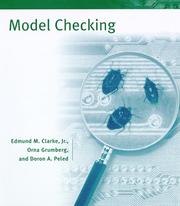 Model checkingEdmund M. Clarke Jr., Orna Grumberg · 1999
- 📕BASICS Lean Implementation ModelDaniel Protzman, William Keen · 2018
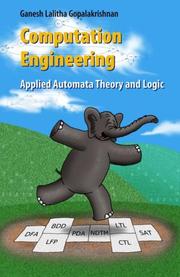 Computation Engineering:Ganesh Gopalakrishnan · 2006
 Verification, Model Checking, and Abstract InterpretationKedar S. Namjoshi, Andreas Podelski · 2005
 Verification, model checking, and abstract interpretationVMCAI 2004 (2004 Venice, Italy) · 2004
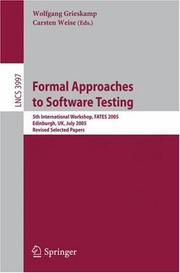 Formal approaches to software testingCarsten Weise · 2006
 Correct hardware design and verification methodsCHARME 2003 (2001 L'Aquila, Italy) · 2003
 Quality of software architectures and software qualityInternational Conference on the Quality of Software Architectures (1st 2005 Erfurt, Germany) · 2005
Ranked by number of editions on Open Library, a rough measure of how lasting a book is.
🔗 Related topics
- Formal methods In computer science, formal methods are mathematically rigorous techniques for the specification, development, analysis, and verification of software and…
- Computation tree logic Computation tree logic (CTL) is a branching-time logic, meaning that its model of time is a tree-like structure in which the future is not determined;…
- Counterexample-guided abstraction refinement Counterexample-guided abstraction refinement (CEGAR) is a technique for symbolic model checking. It is also applied in modal logic tableau calculi algorithms…
- Modal μ-calculus In theoretical computer science, the modal μ-calculus (Lμ, Lμ, or propositional mu-calculus, sometimes just μ-calculus, although this can have a more general…
- TLA+ TLA+ is a formal specification language developed by Leslie Lamport. It is used for designing, modelling, documentation, and verification of programs,…
- Formal verification In the context of hardware and software systems, formal verification is the act of proving or disproving the correctness of a system with respect to a…
- Linear time property In model checking, a branch of computer science, linear time properties are used to describe requirements of a model of a computer system. Example properties…
- Linear temporal logic In logic, linear temporal logic or linear-time temporal logic (LTL) is a modal temporal logic with modalities referring to time. In LTL, one can encode…