Everything about Modal logic
Type of formal logic
Modal logic is a kind of logic used to represent statements about necessity and possibility. In philosophy and related fields it is used as a tool for understanding concepts such as knowledge, obligation, and causation. For instance, in epistemic modal logic, the formula can be used to represent the statement that is known. In deontic modal logic, that same formula can represent that is a moral obligation. Modal logic considers the inferences that modal statements give rise to. For instance, most epistemic modal logics treat the formula as a tautology, representing the principle that only true statements can count as knowledge. However, this formula is not a tautology in deontic modal logic, since what ought to be true can be false. Wikipedia →
🧭 Start here: a 6-step reading path
- Read the overview: Modal logicA 5-minute orientation
- Skim a recent paper: MMSMCNet: Modal Memory Sharing and Morphological Complementary Networks for RGB-T Urban Scene Semantic SegmentationInfluential work since 2022
- Pick up a classic book: Modal logics and philosophyThe most-reprinted book on the subject
- Read the landmark paper: Positive modal logicCited 121 times
- Go sideways: Kripke semanticsA closely related topic
- Go sideways: Epistemic modal logicA closely related topic
📖 Definitions
Noun Any formal system that attempts to deal with modalities, such as possibility and necessity, but also obligation and permission.
🏆 Landmark papers (most cited)
Positive modal logic
The true modal logic
Cylindric modal logic
Refinement modal logic
Applying modal logic
Regression in Modal Logic
The modal logic of quantum logic
Hybrid sabotage modal logic
🆕 Influential since 2022
📚 Books worth reading
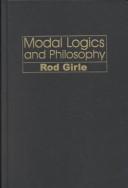 Modal logics and philosophyRod Girle · 2000
 Introducing MultimodalityCarey Jewitt, Jeff Bezemer · 2016
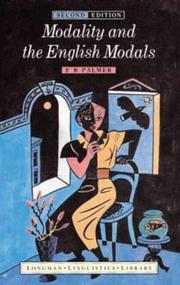 Modality and the English modalsF. R. Palmer · 1979
- 📕Referential Opacity and Modal LogicDagfinn Follesdal · 2009
 Theism and Ultimate ExplanationTimothy O'Connor · 2008
- 📕Modality and Anti-MetaphysicsStephen K. McLeod · 2017
- 📕Possible WorldsJohn Divers · 2002
- 📕Williamson on ModalityJuhani Yli-Vakkuri, Mark McCullagh · 2017
Ranked by number of editions on Open Library, a rough measure of how lasting a book is.
🔗 Related topics
- Kripke semantics Kripke semantics (also known as relational semantics or frame semantics, and often confused with possible world semantics) is a formal semantics for non-classic…
- Epistemic modal logic Epistemic modal logic is a subfield of modal logic that is concerned with reasoning about knowledge. While epistemology has a long philosophical tradition…
- Standard translation In modal logic, standard translation is a logic translation that transforms formulas of modal logic into formulas of non-modal first-order logic that capture…
- S5 (modal logic) In logic and philosophy, S5 is one of five systems of modal logic proposed by Clarence Irving Lewis and Cooper Harold Langford in their 1932 book Symbolic…
- Saul Kripke Saul Aaron Kripke (/ˈkrɪpki/; November 13, 1940 – September 15, 2022) was an American philosopher and logician. He was a distinguished professor of philosophy…
- Accessibility relation An accessibility relation is a relation which plays a key role in assigning truth values to sentences in the relational semantics for modal logic. In relational…
- Common knowledge (logic) Common knowledge is a special kind of knowledge for a group of agents. It is applied in the following way: there is common knowledge of p in a group of…
- Non-normal modal logic A non-normal modal logic is a variant of modal logic that deviates from the basic principles of normal modal logics. Normal modal logics adhere to the…