Everything about Microtraining
Support method for informal learning processes in organisations
The Microtraining method is an approach aimed at supporting informal learning processes in organizations and companies. Learning in this sense means that an active process of knowledge creation is taking place within social interactions, but outside of formal learning environments or training facilities. This process can be facilitated by well-designed and structured systems and by supporting ways of communication and collaboration, like the Microtraining method does. A Microtraining arrangement comprises a time span of 15–20 minutes for each learning session, which can activate and maintain learning processes for a longer period if bundled into series. A Microtraining session can be held face-to-face, online or embedded in an e-learning scenario. Wikipedia →
🧭 Start here: a 6-step reading path
- Read the overview: MicrotrainingA 5-minute orientation
- Pick up a classic book: A race is a nice thing to haveThe most-reprinted book on the subject
- Read the landmark paper: Effects of a Cognitive Adjunct Procedure Within a Microtraining Situation.Cited 22 times
- Go sideways: Peer learningA closely related topic
- Go sideways: Constructivism (philosophy of education)A closely related topic
📖 Definitions
No dictionary entry for this exact phrase.
🗂️ The subject at a glance
🏆 Landmark papers (most cited)
Effects of a Cognitive Adjunct Procedure Within a Microtraining Situation.
Two Decades of Cumulative Microtraining in The Netherlands: An Overview
A microtraining approach to assertion training.
Microtraining of forensic psychiatric patients for empathic counseling skills.
Rationale for and Application of Microtraining To Improve Teaching
Managing and Participating in Group Discussion: a microtraining approach to the communication skill development of students in Higher Education
Microtraining and family therapy skills-towards a possible synthesis*
The Effectiveness of Microtraining in Developing Pharmacists Communication Skills: A study of personality and attitudes
📚 Books worth reading
 A race is a nice thing to haveJanet E. Helms · 1992
 Developmental Strategies for HelpersAllen E. Ivey · 1990
 Basic influencing skillsAllen E. Ivey · 1979
 Basic Attending SkillsAllen E. Ivey · 1974
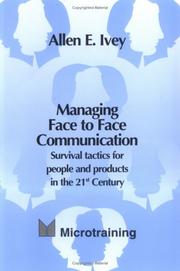 Managing Face to Face CommunicationAllen E. Ivey · 1988
- 📕Micro-Trains · 1995
 Micro-trainingLily Oddie · 1976
- 📕The Micro-Trainer manualCAMI Research Inc · 1983
Ranked by number of editions on Open Library, a rough measure of how lasting a book is.
🔗 Related topics
- Peer learning One of the most visible approaches to peer learning comes out of cognitive psychology, and is applied within a "mainstream" educational framework: "Peer…
- Constructivism (philosophy of education) Constructivism is a theory that suggests that learners do not passively acquire knowledge through direct instruction. Instead, they construct their understandin…
- Networked learning Networked learning is a process of developing and maintaining connections with people and information, and communicating in such a way so as to support…
- Cultural-historical activity theory Cultural-historical activity theory (CHAT) is a theoretical framework to conceptualize and analyse the relationship between cognition (what people think…
- Connectivism Connectivism is a theoretical framework for understanding learning in a digital age. It emphasizes how internet technologies such as web browsers, search…
- Personal knowledge networking Personal knowledge networks (PKN) are methods for organizations to identify, capture, evaluate, retrieve, verify and share information. This method was…
- Nonformal learning Non-formal learning includes various structured learning situations which do not either have the level of curriculum, institutionalization, accreditation…
- Network-centric organization A network-centric organization is a network governance pattern which empowers knowledge workers to create and leverage information to increase competitive…