Live briefing
Everything about Memory-mapped file
Virtual memory region with bytes mapped to a file or file-like resource
A memory-mapped file is a segment of virtual memory that has been assigned a direct byte-for-byte correspondence with some portion of a file or file-like resource. This resource is typically a file that is physically present on disk, but can also be a device, shared memory object, or other resource that an operating system can reference through a file descriptor. Once present, this correlation between the file and the memory space permits applications to treat the mapped portion as if it were primary memory. Wikipedia →
🧭 Start here: a 6-step reading path
- Read the overview: Memory-mapped fileA 5-minute orientation
- Pick up a classic book: Modern Operating SystemsThe most-reprinted book on the subject
- Read the landmark paper: Forensic memory analysis: Files mapped in memoryCited 36 times
- Go sideways: MmapA closely related topic
- Go sideways: Shared memoryA closely related topic
📖 Definitions
No dictionary entry for this exact phrase.
🗂️ The subject at a glance
🏆 Landmark papers (most cited)
Forensic memory analysis: Files mapped in memory
Windows memory forensics: Identification of (malicious) modifications in memory-mapped image files
A Method for Accelerating the Loading of TIFF Files Based on Memory-Mapped File Technology
Mapping Cache for High-Performance Memory Mapped File I/O in Memory File Systems
Analyzing the Overhead of the Memory Mapped File I/O for In-Memory File Systems
Application of memory-mapped file to extract modal data from results of finite element analysis
📚 Books worth reading
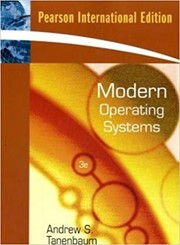 Modern Operating SystemsAndrew S. Tanenbaum, Herbert Bos · 1992
 The web application hacker's handbookDafydd Stuttard, Marcus Pinto · 2007
 Apache CookbookKen Coar, Rich Bowen · 2003
 Absolute beginner's guide to computer basicsMichael Miller · 2003
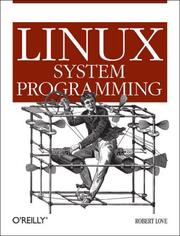 Linux System ProgrammingRobert Love · 2007
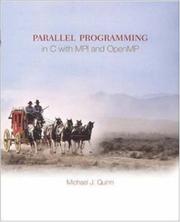 Parallel Programming in C with MPI and OpenMPMichael J. Quinn · 2003
 Embedded AndroidKarim Yaghmour · 2012
 Data structures and algorithms in JavaAdam Drozdek · 2001
Ranked by number of editions on Open Library, a rough measure of how lasting a book is.
🔗 Related topics
- Mmap In computing, mmap(2) is a POSIX-compliant Unix system call that maps files or devices into memory. It is a method of memory-mapped file I/O. It implements…
- Shared memory In computer science, shared memory is memory that may be simultaneously accessed by multiple programs with an intent to provide communication among them…
- Dynamic linker A dynamic linker is an operating system feature that loads and links dynamic libraries for an executable at runtime, before or while it is running. Although…
- Temporary file A temporary file is a file created to store information temporarily, either for a program's intermediate use or for transfer to a permanent file when complete…
- OS-9 OS-9 is a family of real-time, process-based, multitasking, multi-user operating systems, developed in the 1980s, originally by Microware Systems Corporation…
- Portable Executable Portable Executable (PE) is a file format for native executable code on 32-bit and 64-bit Windows operating systems, as well as in UEFI environments. It…
- Architecture of Windows NT The architecture of Windows NT, a line of operating systems produced and sold by Microsoft, is a layered design that consists of two main components, user…
- Dynamic loading Dynamic loading is a mechanism by which a computer program can, at run time, load a library (or other binary) into memory, retrieve the addresses of functions…