Live briefing

Everything about Magnification
Process of enlarging the apparent size of something
Magnification is the process of enlarging the apparent size, not physical size, of something. This enlargement is quantified by a size ratio called optical magnification or magnification ratio. When this ratio is less than one, it refers to a reduction in size, sometimes called de-magnification. Wikipedia →
🧭 Start here: a 6-step reading path
- Read the overview: MagnificationA 5-minute orientation
- Skim a recent paper: Bioaccumulation and trophic magnification of emerging and legacy per- and polyfluoroalkyl substances (PFAS) in a St. Lawrence River food webInfluential work since 2022
- Pick up a classic book: You Can With Beakman & JaxThe most-reprinted book on the subject
- Read the landmark paper: Eulerian video magnification for revealing subtle changes in the worldCited 1,244 times
- Go sideways: EyepieceA closely related topic
- Go sideways: Optical telescopeA closely related topic
📖 Definitions
Noun The act of magnifying; enlargement; exaggeration.
Noun The apparent enlargement of an object in an image, for example using a lens, or by zooming in on a computer.
Noun Amplification.
🏆 Landmark papers (most cited)
Eulerian video magnification for revealing subtle changes in the world
Estimation of high-order aberrations and anisotropic magnification from cryo-EM data sets in RELION -3.1
Stereo magnification
Uniformity of monkey striate cortex: A parallel relationship between field size, scatter, and magnification factor
Curve evolution implementation of the Mumford-Shah functional for image segmentation, denoising, interpolation, and magnification
An estimation and application of the human cortical magnification factor
Perfluoroalkyl Contaminants in an Arctic Marine Food Web: Trophic Magnification and Wildlife Exposure
Modal identification of simple structures with high-speed video using motion magnification
🆕 Influential since 2022
Bioaccumulation and trophic magnification of emerging and legacy per- and polyfluoroalkyl substances (PFAS) in a St. Lawrence River food web
An Activatable Near‐Infrared Afterglow Theranostic Prodrug with Self‐Sustainable Magnification Effect of Immunogenic Cell Death
Frequency-dependency/independency analysis of damping magnification effect provided by tuned inerter absorber and negative stiffness amplifying damper considering soil-structure interaction
Cable vibration measurement based on broad-band phase-based motion magnification and line tracking algorithm
Motion magnification for video-based vibration measurement of civil structures: A review
📚 Books worth reading
 You Can With Beakman & JaxJok Church · 1994
 Beakman & Jax's Microscope BookJok Church · 1995
 The Best of You Can With Beakman and JaxJok Church · 1997
 You Can With BeakmanJok Church · 1992
- 📕Numerical aperture limits on efficient ball lens coupling of laser diodes to single-mode fibers with defocus to balance spherical aberrationR. Gale Wilson · 1994
 You Can With Beakman & JaxJok Church · 1995
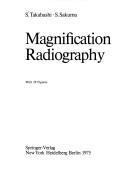 Magnification radiographyTakahashi, Shinji · 1975
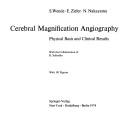 Cerebral magnification angiographyS. Wende · 1974
Ranked by number of editions on Open Library, a rough measure of how lasting a book is.
🔗 Related topics
- Eyepiece An eyepiece, or ocular lens, is a type of lens that is attached to a variety of optical devices such as telescopes and microscopes. It is named because…
- Optical telescope An optical telescope gathers and focuses light mainly from the visible part of the electromagnetic spectrum, to create a magnified image for direct visual…
- Objective (optics) In optical engineering, an objective is an optical element that gathers light from an object being observed and focuses the light rays from it to produce…
- Lens A lens is a transmissive optical device that focuses or disperses a light beam by means of refraction. A simple lens consists of a single piece of transparent…
- Magnifying glass A magnifying glass is a convex lens—usually mounted in a frame with a handle—that is used to produce a magnified image of an object. A magnifying glass…
- Exit pupil In optics, the exit pupil of an optical system is the image (real or virtual) of the system's aperture stop created by the optics that follow it in the…
- Long-focus lens In photography, a long-focus lens is a camera lens which has a focal length that is longer than the diagonal measure of the film or sensor that receives…
- Barlow lens The Barlow lens, named after the English physicist and mathematician Peter Barlow (1776–1862), is an optical tube with diverging lens elements that, used…