Everything about Magical thinking
Belief in the connection of unrelated events
Magical thinking or superstitious thinking is the belief that unrelated events are causally connected despite the absence of any plausible causal link between them, particularly as a result of supernatural effects. Examples include the idea that personal thoughts can influence the external world without acting on them, or that objects must be causally connected if they resemble each other or have come into contact with each other in the past. Magical thinking is a type of fallacious thinking and is a common source of invalid causal inferences. Unlike the confusion of correlation with causation, magical thinking can occur even when there is no statistical connection between two events. Wikipedia →
🧭 Start here: a 6-step reading path
- Read the overview: Magical thinkingA 5-minute orientation
- Skim a recent paper: Magical thinking: Its effect on emergency medical careInfluential work since 2022
- Pick up a classic book: SabrielThe most-reprinted book on the subject
- Read the landmark paper: Magical Thinking and Consumer CopingCited 80 times
- Go sideways: Psychological theories of magicA closely related topic
- Go sideways: Piaget's theory of cognitive developmentA closely related topic
📖 Definitions
Noun The attribution of causal or synchronistic relationships between actions and events which seemingly cannot be justified by reason and observation.
🗂️ The subject at a glance
🏆 Landmark papers (most cited)
Magical Thinking and Consumer Coping
On Three Forms of Thinking: Magical Thinking, Dream Thinking, and Transformative Thinking
Insurance, Risk, and Magical Thinking
Wolof "Magical Thinking"
Magical thinking in narratives of adolescent cutters
Magical thinking: A representation result
Magical thinking decreases across adulthood.
Organ Transplantation and Magical Thinking
🆕 Influential since 2022
Magical thinking: Its effect on emergency medical care
The Costs of Magical Thinking and Hypervigilance
Magical thinking in normal and pathological conditions: literature review
From magical thinking to suicide: Understanding emergency physicians' psychological struggle
Decision-making styles, magical thinking, and intolerance of uncertainty in opioid use disorder
📚 Books worth reading
 SabrielGarth Nix · 1995
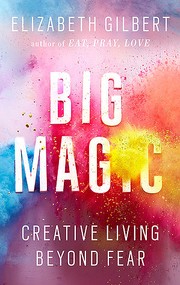 Big MagicElizabeth Gilbert · 2014
 Lirael Daughter of the ClayrGarth Nix · 2001
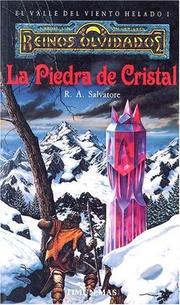 The Crystal ShardR. A. Salvatore · 1988
 The Castle of MirrorsJenny Nimmo · 2005
 The Lake of Tears (Deltora Quest #2)Emily Rodda · 2000
 The Forests of SilenceEmily Rodda · 2000
- 📕Magic and religionGeorge B. Vetter · 1958
Ranked by number of editions on Open Library, a rough measure of how lasting a book is.
🔗 Related topics
- Psychological theories of magic Psychological theories of magic treat magic as a personal phenomenon intended to meet individual needs, as opposed to a social phenomenon serving a collective…
- Piaget's theory of cognitive development Piaget's theory of cognitive development, or his genetic epistemology, is a comprehensive theory about the nature and development of human intelligence…
- Jean Piaget Jean William Fritz Piaget (9 August 1896 – 16 September 1980) was a Swiss psychologist known for his work on child development. Piaget's theory of cognitive…
- Egocentrism Egocentrism is the tendency to view situations primarily from one’s own perspective and to have difficulty understanding or considering the perspectives…
- Karl Rosengren Karl S. Rosengren is an American psychologist, academic, author and researcher. He is a professor with a joint appointment in the brain and cognitive science…
- Cognitive development Cognitive development is a field of study in neuroscience and psychology focusing on a child's development in terms of information processing, conceptual…
- Superstition A superstition is any belief or practice considered by non-practitioners to be irrational or supernatural. It is commonly applied to beliefs and practices…
- Thought insertion Thought insertion is defined by the ICD-10 as the delusion that one's thoughts are not one's own, but rather belong to someone else and have been inserted…