Live briefing
Everything about ML (programming language)
General purpose functional programming language
ML is the metalanguage developed for the Edinburgh LCF theorem prover in the 1970s. It is an early statically typed, functional language with polymorphic type inference in the Hindley–Milner style, and other features like exceptions and mutable variables. ML's design in LCF directly inspired the later ML family and influenced subsequent functional language development. Wikipedia →
🧭 Start here: a 6-step reading path
- Read the overview: ML (programming language)A 5-minute orientation
- Skim a recent paper: Prompting Is Programming: A Query Language for Large Language ModelsInfluential work since 2022
- Pick up a classic book: Categories and computer scienceThe most-reprinted book on the subject
- Read the landmark paper: Stan : A Probabilistic Programming LanguageCited 6,167 times
- Go sideways: OCamlA closely related topic
- Go sideways: Value restrictionA closely related topic
📖 Definitions
No dictionary entry for this exact phrase.
🏆 Landmark papers (most cited)
Stan : A Probabilistic Programming Language
ELIZA—A Computer Program For the Study of Natural Language Communication Between Man and Machine
A programmable programming language
CRN++: Molecular programming language
Incremental programming language development
Mixed language programming
The icon programming language
Programming language semantics
🆕 Influential since 2022
📚 Books worth reading
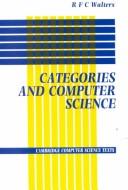 Categories and computer scienceR. F. C. Walters · 1991
 The Standard ML basis libraryJohn H. Reppy · 2004
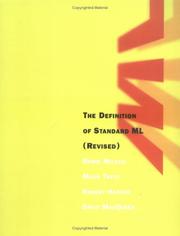 The definition of standard MLR. Milner, Robin Milner · 1997
 Concurrent Programming in MLJohn H. Reppy · 1999
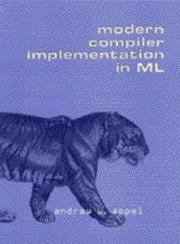 Modern compiler implementation in MLAndrew W. Appel · 1997
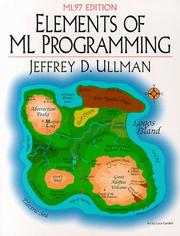 Elements of ML programmingJeffrey D. Ullman · 1994
 Elementary Standard MLGreg Michaelson · 1995
 ML for the working programmerLawrence C. Paulson · 1991
Ranked by number of editions on Open Library, a rough measure of how lasting a book is.
🔗 Related topics
- OCaml OCaml (/oʊˈkæməl/ oh-KAM-əl, formerly Objective Caml) is a general-purpose, high-level, multi-paradigm programming language which extends the Caml dialect…
- Value restriction In programming languages with Hindley–Milner type inference and imperative features, in particular the ML programming language family, the value restriction…
- System F System F (also polymorphic lambda calculus or second-order lambda calculus) is a typed lambda calculus that introduces, to simply typed lambda calculus…
- Parametric polymorphism In programming languages and type theory, parametric polymorphism allows a single piece of code to be given a "generic" type, using variables in place…
- Hindley–Milner type system A Hindley–Milner (HM) type system is a classical type system for the lambda calculus with parametric polymorphism. It is also known as Damas–Milner or…
- Standard ML Standard ML (SML) is a general-purpose, high-level, modular, functional programming language with compile-time type checking and type inference. It is…
- Polymorphism (computer science) In programming language theory and type theory, polymorphism allows a value or variable to have more than one type and allows a given operation to be performed…
- Caml Caml (originally an acronym for Categorical Abstract Machine Language) is a multi-paradigm, general-purpose, high-level, functional programming language…